
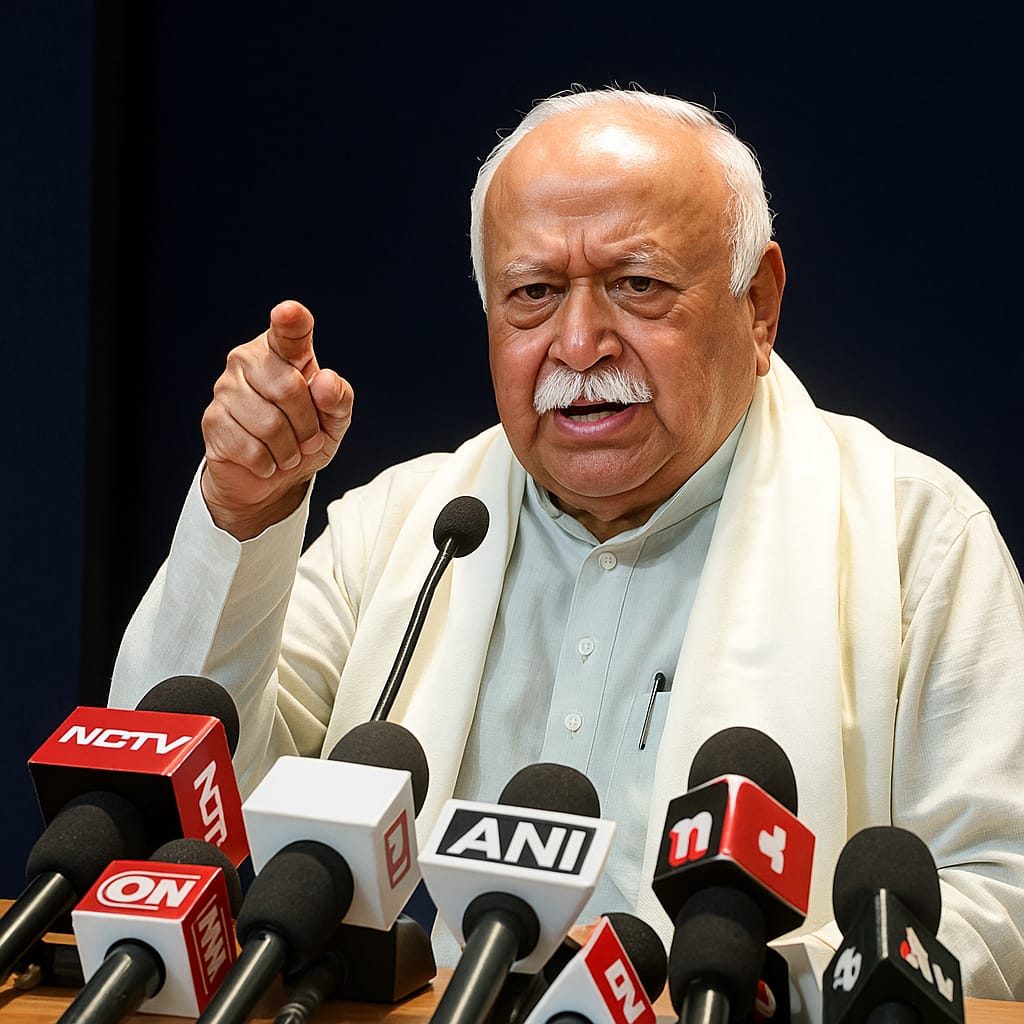
Mohan Bhagwat Calls National Security A Civilizational Duty: Why India Must Be Powerful
Introduction: Why Should You Care About National Security as a Civilizational Duty?
Is national security just about soldiers and borders? Or is there a deeper, more profound meaning behind it? After analyzing everything across the internet and gathering real-world insights, the Bhussan.com team shares this friendly, helpful article to help you understand why RSS Chief Mohan Bhagwat believes national security is not only a matter of defense but a civiliiozatnal duty deeply rooted in India’s values, society, and identity.
“Bhagwat’s remarks emphasize the importance of national security as a civilizational duty, rooted in India’s civilizational strength.”
Are you curious to know how cultural unity, family values, ecology, and social strength all tie into the country’s safety? Keep reading—this might change how you view national security forever. 😊
National Security Beyond Borders: Mohan Bhagwat’s Vision

When we think of national security, what usually comes to mind? Military strength, defense budgets, or geopolitical strategies? Dr. Mohan Bhagwat, the RSS chief, asks us to broaden our perspective. To him, national security is an all-encompassing responsibility—one that starts with societal unity, family values, ecological responsibility, and internal strength.
He says, “We have no option but to be powerful.” But this power isn’t about global dominance or trade. It’s about ensuring every Indian can lead a peaceful, healthy, and empowered life without fear of external threats.
This idea aligns with the RSS’s philosophy of Panch Parivartan—five-fold transformation involving family, society, ecology, economy, and governance. Bhagwat stresses that a fractured society can never be strong. So, the foundation of India’s security lies in social cohesion and cultural rootedness.
“Bhagwat’s speech firmly ties the idea of national security as a civilizational duty to India’s historical identity.”
Operation Sindoor: A Practical Manifestation of Strength

In April 2025, following the terror attack in Pahalgam, India launched Operation Sindoor, a military operation that showcased the country’s readiness and strategic prowess. The Indian Air Force struck deep into terrorist infrastructure inside Pakistan with precision, downing fighter jets and transport aircraft. The Indian Navy also played a critical role by holding strategic maritime positions.
This operation wasn’t just a show of force—it was a message: India is capable, coordinated, and ready to defend itself.
Bhagwat’s statements echo this sentiment. He calls for self-reliance and warns that India must not depend on others for its security. The goal is deterrence: “No one should be able to conquer us—even if multiple powers come together.”
This ties into the idea of a psychologically and culturally strong nation, one that doesn’t just prepare for war but prevents it through sheer strength.
“National security as a civilizational duty reminds us that security is not just about borders, but also about cultural resilience.”
How You Can Support National Security as a Civilizational Duty
You don’t need to be in the army to contribute. Here are ways to help:
-
Promote social unity in your community
-
Support environmental initiatives
-
Stay informed about national security issues
-
Embrace and share Indian cultural heritage
Each small step strengthens the civilizational foundation of India’s security.
He urges Hindu society to stand strong globally. For instance, Hindus facing persecution in Pakistan and Bangladesh are no longer fleeing but choosing to resist and fight for their rights. This internal resolve within the community, Bhagwat believes, will reflect India’s overall strength.
What Does This Mean for You and Me? How Can We Contribute?

When you view national security as a civilizational duty, your defense strategies shift from reactive to proactive.
You might wonder, “What can I do? I’m not in the army or policymaking.” The answer is simple—national security is everyone’s business. Here’s how you can help:
-
Strengthen Social Bonds: Foster harmony in your community and family.
-
Promote Environmental Awareness: Participate in local ecological initiatives.
-
Stay Informed and Prepared: Understand geopolitical realities and support self-reliance.
-
Support Cultural Identity: Learn about India’s civilizational heritage and share it with younger generations.
By doing so, we all contribute to a stronger, safer India.
“As part of national security as a civilizational duty, the Sangh promotes Panch Parivartan to strengthen society from within.”
Pros and Cons of Viewing National Security as a Civilizational Duty
| Pros | Cons |
|---|---|
| Creates a holistic approach combining military & social strength | May risk sidelining diplomatic approaches if misunderstood |
| Encourages grassroots participation in national security | Potentially alienates non-Hindu communities if not inclusive |
| Builds long-term resilience through cultural unity | Risk of conflating civilizational pride with nationalism |
| Promotes environmental sustainability as a security factor | Complex to implement in a diverse society |
FAQs About National Security and Mohan Bhagwat’s Vision
1. What does Mohan Bhagwat mean by “national security as a civilizational duty”?
Mohan Bhagwat envisions national security not merely as a governmental function but as a collective responsibility rooted in India’s civilizational ethos. He emphasizes that safeguarding the nation transcends military might, involving the preservation of cultural values, social harmony, and moral duties. This perspective aligns with the idea that every citizen contributes to national security by upholding societal values and unity.
2. How is Operation Sindoor related to Bhagwat’s vision?
Operation Sindoor exemplifies Bhagwat’s concept by demonstrating a decisive response to threats against national integrity. The operation targeted terrorist infrastructures, reinforcing the stance that protecting the nation’s sovereignty is paramount. Bhagwat lauded this action as enhancing national morale and self-respect, reflecting the civilizational duty to defend the nation.
3. Why does Bhagwat emphasize family values in national security?
Bhagwat underscores family values as the foundation of a stable society. He believes that instilling virtues like discipline, respect, and responsibility within families cultivates citizens who are conscious of their roles in national security. This approach suggests that strong familial structures contribute to a cohesive and resilient nation.
4. What is Panch Parivartan, and how does it connect to national security?
Panch Parivartan, or Five Transformations, is an initiative focusing on
-
Social Harmony: Promoting unity across diverse communities.
-
Family Values: Strengthening moral foundations.
-
Environmental Protection: Ensuring sustainable development.
-
Self-Reliance: Encouraging indigenous industries.
-
Civic Duties: Fostering responsible citizenship.
These elements collectively enhance national security by building a robust and self-sufficient society.
5. How can ordinary citizens contribute to national security?
Citizens play a vital role by:
-
Being Vigilant: Reporting suspicious activities.
-
Promoting Unity: Bridging communal divides.
-
Supporting Local Economies: Reducing dependency on imports.
-
Participating in Civic Activities: Engaging in community development.
Such actions reinforce the nation’s internal strength and resilience.
6. Why is internal social harmony important for defense?
Internal harmony ensures a unified front against external threats. A society free from internal conflicts can allocate resources and attention to national defense more effectively. Bhagwat emphasizes that social cohesion is a strategic asset in maintaining national security.
7. What role does ecology play in national security?
Environmental stability is crucial for sustaining livelihoods and preventing resource-based conflicts. Bhagwat’s emphasis on ecological balance aligns with the understanding that environmental degradation can lead to socio-economic instability, thereby affecting national security.
8. How does Bhagwat’s vision differ from traditional military approaches?
Traditional approaches focus on external defense mechanisms. In contrast, Bhagwat’s vision incorporates cultural, social, and moral dimensions, advocating for a holistic approach where every societal aspect contributes to national security.
9. Is this vision inclusive of all communities in India?
Yes, the vision promotes inclusivity by emphasizing unity and collective responsibility across all communities, transcending religious and cultural differences. It encourages every citizen to participate in nation-building and security.
10. What lessons can be learned from the response of Hindus in Bangladesh and Pakistan?
The resilience of Hindus in neighboring countries highlights the importance of cultural preservation and community solidarity. Their experiences underscore the need for a strong, unified national identity to withstand external pressures.
11. How does Bhagwat define the civilisational aspect of national security?
Bhagwat emphasizes that national security transcends military strength, encompassing the preservation of India’s rich cultural heritage, values, and societal structures. He believes that a nation’s true strength lies in its civilisational continuity and moral fabric.
12. What is the significance of self-reliance in Bhagwat’s vision?
Self-reliance, or ‘Atmanirbharta’, is central to Bhagwat’s vision. He advocates for economic and technological independence to reduce external dependencies, thereby strengthening national security from within.
13. How does Operation Sindoor reflect India’s civilisational duty?
Operation Sindoor is seen as a manifestation of India’s commitment to protecting its citizens and sovereignty. It underscores the nation’s resolve to uphold justice and peace, aligning with its civilisational ethos of righteousness.
14. Why does Bhagwat stress the role of youth in national security?
Bhagwat views the youth as torchbearers of India’s future. He encourages them to imbibe cultural values, stay informed, and actively participate in nation-building activities, thereby contributing to a secure and vibrant nation.cihs.org.in
15. How can education contribute to national security?
Education plays a pivotal role by instilling a sense of patriotism, awareness of civic duties, and understanding of India’s cultural heritage. Bhagwat advocates for an education system that fosters responsible and informed citizens.
16. What is the role of women in Bhagwat’s national security framework?
Bhagwat acknowledges the vital role of women in shaping society. He emphasizes their empowerment and active participation in societal development, which in turn fortifies the nation’s security and moral compass.
17. How does Bhagwat’s vision address internal threats?
He identifies internal discord, moral degradation, and cultural erosion as significant threats. By promoting unity, ethical conduct, and cultural pride, Bhagwat believes these internal challenges can be mitigated.
18. What is the connection between spirituality and national security?
Bhagwat posits that spiritual strength fosters resilience, ethical behavior, and a sense of purpose among citizens, all of which are essential components of a secure and harmonious nation.
19. How does Bhagwat propose to integrate traditional knowledge into modern security paradigms?
He advocates for the inclusion of traditional wisdom, such as Ayurveda and indigenous defense techniques, into contemporary practices, thereby enriching and diversifying India’s security strategies.
20. What is the significance of community service in national security?
Community service fosters social cohesion, empathy, and collective responsibility. Bhagwat encourages citizens to engage in community initiatives, strengthening societal bonds and contributing to a stable nation.
21. How does Bhagwat’s vision align with global peace efforts?
While emphasizing national strength, Bhagwat also supports global harmony. He believes that a strong and culturally rooted India can contribute positively to global peace and cooperation.India Today
22. What is the role of media in promoting national security as a civilisational duty?
Bhagwat urges media to act responsibly by promoting content that reinforces cultural values, national unity, and informed discourse, thereby playing a constructive role in national security.
23. How does Bhagwat’s approach address economic disparities?
He emphasizes inclusive development and equitable resource distribution, ensuring that all sections of society contribute to and benefit from national progress, thereby reducing vulnerabilities.
24. What is the importance of environmental stewardship in this vision?
Environmental conservation is seen as a moral and civilisational duty. Bhagwat advocates for sustainable practices that protect natural resources, ensuring long-term national well-being.
25. How does Bhagwat view the role of diaspora in national security?
He recognizes the Indian diaspora as cultural ambassadors who can promote India’s values globally, strengthen international ties, and contribute to national interests.
26. What measures does Bhagwat suggest for cultural preservation?
He encourages the revival of traditional arts, languages, and customs, integrating them into daily life and education to maintain cultural continuity and pride.
27. How does Bhagwat’s vision address technological advancements?
Bhagwat supports the adoption of technology that aligns with national interests and ethical standards, promoting innovation that serves societal needs and security.
28. What is the significance of festivals and rituals in national security?
Festivals and rituals foster community bonding and cultural identity. Bhagwat sees them as opportunities to reinforce societal values and unity, contributing to a cohesive nation.
29. How does Bhagwat propose to handle ideological conflicts?
He advocates for dialogue, mutual respect, and education to address ideological differences, promoting a culture of understanding and national solidarity.
30. What is the overarching goal of viewing national security as a civilisational duty?
The ultimate aim is to build a resilient, united, and culturally rich nation where every citizen contributes to and upholds the principles that ensure long-term peace, prosperity, and sovereignty.
Conclusion: Embracing National Security as a Civilizational Duty for India’s Future
Mohan Bhagwat’s call to view national security as a civilizational duty invites all Indians to rethink defense. It’s not just about military might—it’s about building internal strength through social unity, family, culture, and ecology.
Are you ready to take part in this collective mission? Together, we can make India invincible—not just in war, but in peace.
External Links for Further Reading
-
Ministry of Defence, Government of India — Official updates on India’s defense strategies
-
Indian Air Force: Operation Sindoor — Details on military operations and readiness
-
Ecological Security and National Interest — Role of environment in national security