
✨Introduction
Have you ever dreamt of floating weightlessly above Earth, looking down at the world from 400 kilometers above? 🌍
Now imagine one of us doing just that—not in a sci-fi movie, but in real life.
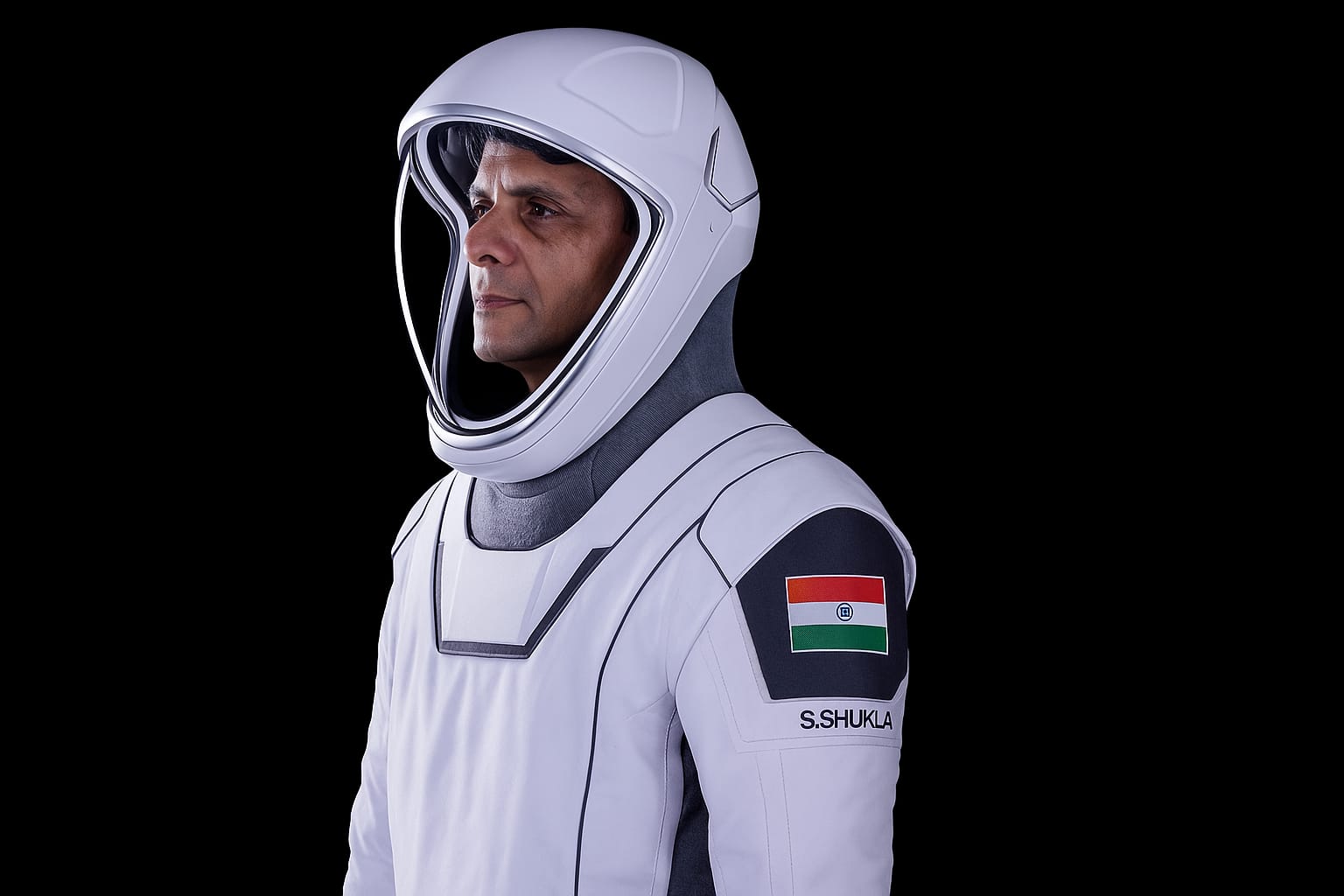
Meet Shubhanshu Shukla, the latest Indian to step beyond our planet’s atmosphere. But this isn’t just another astronaut story. This is a moment of transformation—for Shukla, for ISRO, and for every Indian who’s ever looked up at the stars with wonder.
Is this something you want to search the entire internet for, analyze it, and separate it from everyone else? We did that for you.
👉 After analyzing everything across the internet and gathering real-world insights, the Bhussan.com team shares this friendly, helpful article. Let’s jump in 🚀
🧬 Section 1: Who is Shubhanshu Shukla – and Why Should You Care?

If you’ve never heard of Shubhanshu Shukla before 2025, you’re not alone. But that’s changed—fast.
Shukla isn’t a celebrity. He isn’t a billionaire tourist. He’s a fighter pilot turned astronaut, and the kind of quiet powerhouse that often flies under the radar (pun intended 😄).
Let’s break it down:
-
Born in Lucknow, served as a Commander in the Indian Navy
-
Flew MiGs, Jaguars, and Su-30s as a test pilot
-
Trained as a Vyomanaut (India’s astronaut corps under the Gaganyaan program)
-
Fluent in physics, aerodynamics, and space systems
-
Chosen as the only Indian astronaut aboard Axiom Space’s 2025 Ax-4 Mission
His role? Far from just riding along. Shukla conducted multiple Indian experiments on the International Space Station (ISS)—making him India’s first space scientist aboard a private space mission.
Why should you care? Because this is the future of Indian space exploration—bridging ISRO, private space companies, and our global presence.
🛰️ Section 2: What Exactly Was the Axiom-4 Mission? (And Why It Matters for India)
Okay, let’s clear one thing up: Axiom-4 isn’t just a NASA mission. It’s something much bigger—and more futuristic.
Axiom Space is building the world’s first private space station. To prepare, they’ve launched a series of missions to the ISS, including international astronauts, researchers, and commercial payload specialists. Enter: Axiom-4 (Ax-4).
🌐 The Mission Stats:
-
Launch Date: June 25, 2025, on a SpaceX Falcon 9
-
Destination: The International Space Station
-
Crew Members: Astronauts from India, Hungary, Poland, and the USA
-
Commander: Peggy Whitson (former NASA astronaut)
-
Duration: ~14 days in orbit
-
Experiments Conducted: 60+ from 31 countries
But here’s where it gets interesting for us: India funded and designed seven unique science experiments carried by Shukla himself. These included seed germination, algae-based oxygen studies, human–machine interaction trials, and tardigrade (water bear) survivability in space.
This isn’t just a science fair. It’s proof that India can lead meaningful scientific work in space, even on commercial platforms.
🧪 Section 3: 7 Indian Space Experiments Conducted by Shukla
Here’s where things get hands-on—and futuristic.
👇 These are the India-led experiments Shukla conducted in microgravity:
-
🌱 Methi & Moong Seed Growth (UAS Dharwad)
Goal: Can India’s staple crops grow in space? -
🦠 Algae Cultivation for Space Nutrition (ICGEB, NIPGR)
Goal: Can microalgae generate oxygen + food on deep space missions? -
💪 Muscle Regeneration Under Stress (inStem)
Goal: Fight astronaut muscle loss with biotech solutions. -
🧠 Cognitive Load on Digital Displays
Goal: Study human–tech interaction in zero gravity for future spacecraft UI. -
🧬 Tardigrades in Microgravity
Goal: See how these extremophiles survive and revive after space exposure. -
🌿 Cyanobacteria Growth
Goal: Oxygen generation potential for long-term space stations. -
🍚 Rice, Tomato, and Brinjal Seeds
Goal: Map germination behavior under microgravity.
These projects aren’t just academic. They’re designed to support India’s long-term space goals, especially Gaganyaan and future orbital habitats.
🔭 Section 4: What This Means for Gaganyaan and India’s Space Future
Let’s connect the dots.
India’s Gaganyaan mission, planned for 2026-27, will be our first crewed space mission. It’s bold, indigenous, and high-risk.
Now imagine having someone like Shukla, who’s already “been there, done that” in orbit, advising and helping build training modules, astronaut safety systems, and mission design.
Shukla’s Ax-4 experience:
-
Provides live test data to Indian space scientists
-
Strengthens astronaut readiness training
-
Enables cross-collaboration with NASA & SpaceX
-
Makes India part of the commercial space ecosystem
It’s like sending a spy into the future—and having him report back with intel, learnings, and ideas.
💡 This is India stepping from the observer’s desk into the pilot’s seat of global space diplomacy.
✅ Pros & Cons Table: Shubhanshu Shukla’s Axiom-4 Mission
| Pros | Cons |
|---|---|
| 🟢 First Indian astronaut aboard a private mission | 🔴 Not an ISRO-led government mission |
| 🟢 Hands-on data for Gaganyaan training | 🔴 Limited duration (~14 days) |
| 🟢 7 Indian experiments successfully conducted | 🔴 Public awareness is still low |
| 🟢 Opens doors to commercial astronaut programs | 🔴 No Indian-made tech used in launch |
❓30+ Questions & Answers Shubhanshu Shukla ISS Mission
-
Who is Shubhanshu Shukla?
→ An Indian Navy Commander, test pilot, and astronaut selected for India’s Gaganyaan program and Axiom-4 mission. -
What is the Axiom-4 mission?
→ A private mission to the International Space Station (ISS) organized by Axiom Space in collaboration with SpaceX and NASA. -
When did the Axiom-4 mission launch?
→ On June 25, 2025, aboard a SpaceX Falcon 9 rocket. -
Is Shubhanshu Shukla India’s first astronaut?
→ No. He’s the second Indian in space after Rakesh Sharma (1984) but the first aboard the ISS on a private mission. -
Was Axiom-4 an ISRO mission?
→ No. It was a commercial spaceflight by Axiom Space, with payload contributions from ISRO-affiliated research. -
What role did Shukla play on the ISS?
→ He was a mission pilot and led seven Indian microgravity experiments. -
Which countries were represented in Axiom-4?
→ India 🇮🇳, United States 🇺🇸, Hungary 🇭🇺, and Poland 🇵🇱. -
What kind of experiments did India conduct in space?
→ Plant germination, algae cultivation, human cognition in microgravity, muscle degeneration studies, tardigrade survival, cyanobacteria growth, and seed behavior. -
Were these experiments developed in India?
→ Yes, by institutes like inStem, UAS Dharwad, ICGEB, and NIPGR. -
How long did Shukla stay in space?
→ Approximately 14 days aboard the ISS. -
What is the significance of Shukla’s mission for India?
→ It provides operational experience, promotes space research, and contributes directly to Gaganyaan readiness. -
What is Gaganyaan?
→ India’s indigenous human spaceflight mission, planned for launch between 2026–2027. -
Will Shukla fly again in Gaganyaan?
→ Likely yes—he’s one of the four shortlisted astronauts for future Gaganyaan missions. -
Was this the first Indian experiment on the ISS?
→ Yes, this marks the first time Indian-led science experiments were conducted in orbit on a private mission. -
What is Axiom Space?
→ A Houston-based private space company building the world’s first commercial space station. -
What’s the connection between SpaceX and Axiom?
→ Axiom uses SpaceX’s Crew Dragon spacecraft and Falcon 9 launch vehicles for its crewed missions to the ISS. -
Did Shukla train in the US for this mission?
→ Yes. He trained under NASA, SpaceX, and Axiom Space before launch. -
Did the mission include live video or updates?
→ Yes, Axiom released images, videos, and crew diaries—including a video from Shukla himself. -
What does ISRO gain from this mission?
→ Practical astronaut experience, experiment validation, and international collaboration exposure. -
Are there more such missions planned?
→ Axiom is expected to continue Ax-5, Ax-6, and future missions—India may join again. -
Is this linked to India’s plan for a space station?
→ Indirectly. It lays the foundation for Indian participation in orbital science habitats. -
What is microgravity?
→ A condition in orbit where gravity is so weak that it creates a weightless environment. -
Why are plant experiments important in space?
→ They help design self-sustaining ecosystems for long-duration space travel. -
Can food be grown in space?
→ Yes. Shukla’s mission tested methi, moong, tomato, brinjal, and rice germination in space. -
What are tardigrades, and why study them?
→ Tiny, resilient creatures that can survive extreme conditions—even space. They may hold biotech secrets. -
What are cyanobacteria and their purpose in space?
→ A type of bacteria that can produce oxygen, useful for life support systems. -
How does space affect human muscles?
→ Muscles weaken in microgravity. Shukla’s experiments looked at ways to prevent this. -
How does this mission help India’s private space sector?
→ It builds confidence, opens doors for startups, and proves India can contribute to commercial space exploration. -
How many Indian astronauts are trained for spaceflight?
→ Four, currently trained under the Gaganyaan program. -
Can Indians apply to be astronauts?
→ For now, through government selection (IAF test pilots), but private astronaut training may open in future. -
What’s next for Shubhanshu Shukla?
→ He may lead or assist in India’s Gaganyaan-4 mission and contribute to astronaut training and R&D. -
Where can I watch mission videos or updates?
→ Axiom Space’s official YouTube, Instagram, and NASA’s mission pages. -
How does this impact students in India?
→ It inspires STEM careers, shows practical science in action, and proves space isn’t out of reach. -
Will India launch its space station?
→ Yes. ISRO plans a small space station (~2035), and missions like this help prepare for it.
🏁 Conclusion: One Astronaut, A Billion Dreams
When Rakesh Sharma first went to space in 1984, he was a lone ambassador for a newly rising India. In 2025, Shubhanshu Shukla is doing something similar—but this time, it’s part of a much bigger, more globally connected future.
From growing seeds in orbit 🌱 to testing oxygen from algae 🌊, his mission brings India not just closer to space, but closer to becoming a leader in it.
So, what do we do with this moment?
We amplify it. We talk about it. We inspire more students, fund more missions, and prepare the next generation of space explorers.
🚀 Because India’s next leap won’t just be symbolic—it’ll be strategic.