

🧠 AI Appreciation Day 2025: How Students Are Embracing AI as a Learning Ally, Not a Shortcut
💡 Introduction: What Are We Celebrating Today?
Do you remember when AI felt like science fiction? A far-off dream of robots and talking machines? Fast forward to 2025, and AI is not only real—it’s in your pocket, your classroom, and maybe even in this very article. But here’s the real question: Are we using AI as a partner in growth, or just a shortcut to get ahead?
This AI Appreciation Day, we’re not just celebrating technology—we’re celebrating the way young minds across the globe are embracing AI as a responsible, supportive, and empowering learning tool.
After analyzing everything across the internet and gathering real-world insights, the Bhussan.com team shares this friendly, helpful article to guide you through this evolving space where curiosity meets innovation.
Let’s delve into why AI in Education 2025 is a game-changer, how students are utilizing it ethically, and what India’s leadership in responsible AI usage means for the future.
🎓 Section 1: How AI Has Become the New Study Partner in 2025
The BrightCHAMPS survey revealed something fascinating: 58% of students globally are now actively using AI tools to support their studies. That number might feel staggering, but if you look around, it makes perfect sense.
Students are interacting with AI in many different ways:
-
ChatGPT helps write essays, solve doubts, or even explain math problems.
-
Photomath decodes complex algebra step-by-step.
-
Grammarly and Quillbot ensure their writing is sharp and polished.
-
Khan Academy’s AI tutors adapt in real-time to student weaknesses.
This isn’t just about automation. It’s about enhancement.
Ask yourself: When was the last time a textbook gave you personalized feedback in seconds?
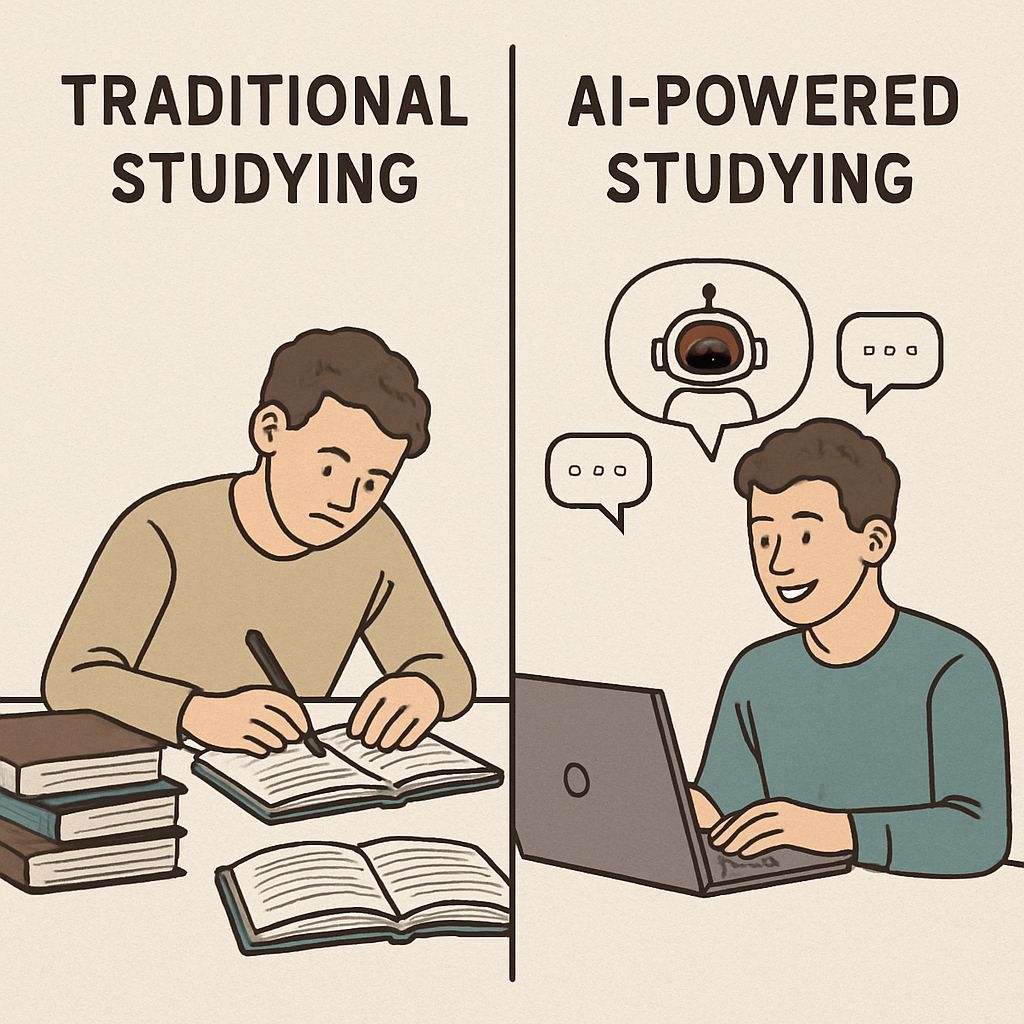
In today’s digital classroom, students aren’t cheating with AI—they’re collaborating with it. This shift is as revolutionary as the calculator or the internet. And for once, students are ahead of the system.
🇮🇳 Section 2: Why India Is Leading the Way in Ethical AI Adoption
One stat from the BrightCHAMPS report truly stands out: 95% of Indian students claim they do not use AI to cheat. That goes against the grain of global concerns around AI misuse in education.
So what’s India doing differently?
-
Digital-first learning culture: India’s rapid EdTech growth since the pandemic has made students familiar with ethical digital tools.
-
Curriculum changes: Schools and institutions are incorporating AI ethics into digital literacy programs.
-
Parental involvement: Parents encourage kids to use AI for practice, not shortcuts.
-
Cultural emphasis on sincere learning: Education is held in deep respect in Indian households, discouraging shortcuts and encouraging a deeper understanding.
Students in cities like Delhi, Pune, Bengaluru, and Hyderabad are using AI to build projects, learn coding, and even prep for IIT or NEET—but they’re still relying on their effort to pass.
📊 Section 3: AI Tools That Are Changing the Way We Learn (With Table)
Here’s a quick look at how students use AI daily and what tools are powering this shift:
| Purpose | AI Tool | What It Helps With |
|---|---|---|
| Writing Support | Grammarly, ChatGPT, Quillbot | Grammar correction, rewriting, and tone |
| Math & Science Help | Photomath, Wolfram Alpha, and Brainly | Solving equations, step-by-step guidance |
| Doubt Solving | Khan Academy AI, Google Socratic | Explaining tough topics |
| Coding & Programming | GitHub Copilot, Replit AI | Real-time coding suggestions |
| Language Learning | Duolingo AI, Elsa Speak | Pronunciation, vocabulary, and fluency |
These tools aren’t just cool apps. They are digital coaches, mentors, and companions—and unlike humans, they never get tired.
📉 Section 4: How AI Is Supporting Other Sectors in India Too
While education gets the spotlight, let’s not forget that India is using AI to transform several major sectors:
1. Healthcare
-
AI diagnostics in rural clinics detect diseases like TB and cancer earlier than human scans.
-
AI voice assistants help doctors take patient notes in real time.
2. Agriculture
-
Farmers use AI-powered drones and sensors to monitor soil health and predict weather.
-
Platforms like CropIn help improve yield with smart analytics.
3. Governance
-
Chatbots like MyGov AI guide citizens to the right services.
-
Traffic police use AI-powered surveillance to monitor rule violations.
India isn’t just catching up with the AI wave—it’s steering it.
📋 Pros & Cons of Using AI in Education
| Pros | Cons |
|---|---|
| Personalized learning anytime | Overdependence, if not balanced |
| Instant feedback and explanations | Can encourage laziness if misused |
| Boosts creativity and problem-solving | May not always provide accurate or ethical responses |
| Prepares students for a tech-driven world | Raises plagiarism concerns in unchecked environments |
💬 Conclusion: A New Era of Learning, A New Kind of Student
So, what do we take away from AI Appreciation Day 2025?
That students today aren’t just digital natives—they’re AI natives. They don’t see AI as a threat or a cheat code. They see it as a helpful study buddy, a learning accelerator, a means to ask smarter questions and seek better answers.
And if India is any indicator, the future of education looks both tech-rich and values-driven.
AI isn’t here to replace teachers. It’s here to amplify learning. And the best part? The students already know that.
What about you? Are you ready to learn smarter, not harder?
❓ Frequently Asked Questions (FAQs) About AI in Education 2025
1. What is AI in Education 2025?
AI in Education 2025 refers to the growing role of artificial intelligence in helping students learn smarter through tools like chatbots, tutoring apps, writing assistants, and adaptive learning platforms.
2. How are students using AI in their studies?
Students use AI for writing essays, solving math problems, learning new languages, revising notes, and even practicing coding — all with instant, personalized feedback.
3. Is using AI in studies considered cheating?
Not necessarily. If AI is used ethically — like a tutor or assistant — it’s perfectly valid. Problems arise when students submit AI-written work as their own without understanding the content.
4. What did the BrightCHAMPS survey reveal about AI usage?
It revealed that 58% of students globally use AI in education, and 95% of Indian students say they don’t use it for cheating — they use it to learn better.
5. What are some popular AI tools students use?
ChatGPT, Grammarly, Quillbot, Photomath, Khanmigo, and Duolingo AI are among the most used in 2025.
6. How does AI improve student learning?
AI adapts to each student’s pace, identifies weak areas, and provides targeted guidance — something a textbook or even a teacher might miss.
7. Can AI replace teachers?
No, AI is a supplement, not a substitute. It supports teachers and enhances classroom experiences, but doesn’t replace the human connection.
8. Are Indian students using AI more responsibly?
Yes! The survey shows a strong cultural and educational emphasis on ethical use in India. Students value AI as a support system, not a shortcut.
9. How do AI tutors work?
AI tutors analyze your inputs — like essays or math problems — and give personalized suggestions or step-by-step solutions in real time.
10. Does AI always give correct answers?
Nope! AI can be wrong. It’s a tool, not a genius. Always double-check facts and solutions — especially in exams or projects.
11. Is AI expensive to use?
Many popular AI tools are free or freemium. Even paid versions are often affordable for students, especially in India’s price-sensitive market.
12. How can teachers use AI?
Teachers use AI to generate quiz questions, summarize lessons, grade papers faster, and identify struggling students.
13. What are the risks of overusing AI?
Overdependence can reduce creativity and critical thinking. It’s important to balance AI with traditional study methods.
14. Can AI help with language learning?
Yes! Apps like Duolingo AI and Elsa Speak help students improve pronunciation, fluency, and vocabulary with smart feedback.
15. How does AI help in math?
AI apps like Photomath and Wolfram Alpha break down complex equations, show step-by-step solutions, and explain concepts visually.
16. What’s unique about AI in Education 2025?
The technology is now deeply integrated — not just add-on apps but core to how curriculums, teachers, and students interact.
17. Is AI allowed in Indian exams?
Currently, AI is allowed for practice and prep but not permitted during actual exams. Institutions are working on strict policies.
18. How do parents feel about AI in studies?
Many parents are now open to AI, especially when they see it improving their child’s confidence and performance.
19. What are India’s contributions to AI in education?
India is building AI-based EdTech platforms, integrating AI into school curricula, and creating policies to ensure ethical use.
20. Can AI help students with special needs?
Yes! AI provides personalized learning, voice assistance, and visual aids, helping students with dyslexia, ADHD, or hearing impairments.
21. How is AI different from Google or YouTube learning?
Google gives results. AI gives explanations. It simulates conversation, adapts to your inputs, and provides structured answers.
22. What’s the government doing about AI in education?
The Indian government is pushing digital literacy and AI curriculum development as part of NEP (New Education Policy).
23. Will AI lead to job losses in education?
AI will change roles, not erase them. Teachers will become facilitators and mentors rather than just content deliverers.
24. Are there AI tools to improve student writing?
Absolutely! Grammarly, ChatGPT, and Quillbot are widely used to check grammar, rewrite content, and improve clarity.
25. How do I avoid plagiarism while using AI?
Use AI for ideas, drafts, or grammar help — but always rewrite in your voice. Cite sources when necessary.
26. Can rural students in India access AI tools?
Yes, especially with mobile-first apps and low-data solutions being developed. Many tools work offline or in low-connectivity zones.
27. Is AI safe for children?
Most reputable tools have age-appropriate filters and parental controls. Still, supervision is essential.
28. How do schools check for AI misuse?
Some schools use AI detectors or plagiarism tools to check if assignments were AI-written without proper citation.
29. Can AI help in preparing for competitive exams?
Yes! From NEET to UPSC, AI offers mock tests, time management strategies, and revision help tailored to exam patterns.
30. What will AI in education look like in 2030?
Expect AI-powered virtual classrooms, emotion-detecting feedback systems, and full digital twins for students’ academic growth!
31. Where can I learn more about ethical AI usage?
Check out NITI Aayog’s AI for All initiative and UNESCO’s AI in Education policy.