
Apple AI Strategy: Tim Cook’s Bold Vision for a “Modern” Intelligence
Introduction: A Big Question on Everyone’s Mind 🤔
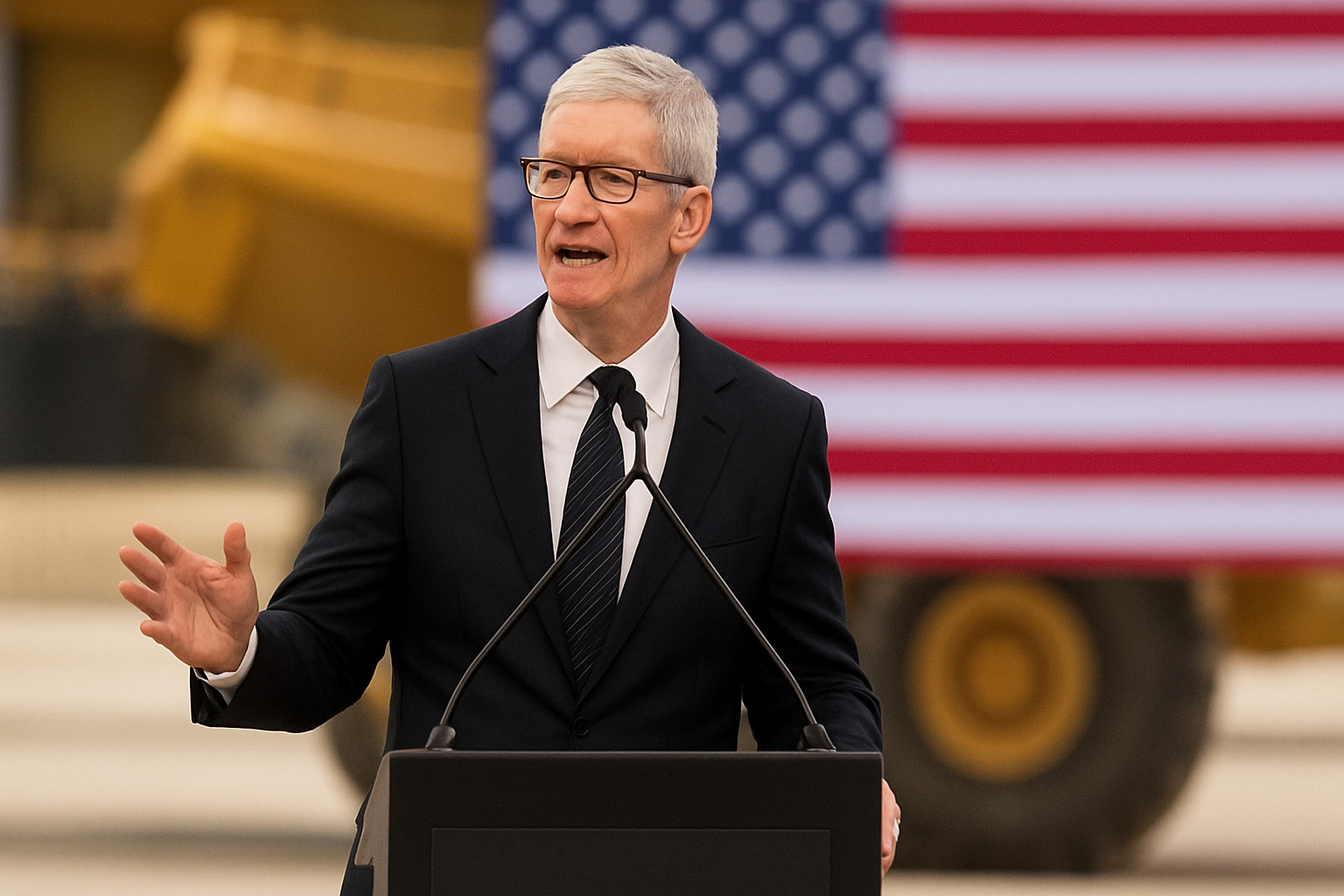
When Apple CEO Tim Cook said, “We have rarely been first,” and promised that Apple would make AI “modern” in the same way the iPhone once did for smartphones, it sparked widespread curiosity. What exactly does he mean by “modern AI”? Why is Apple entering the AI conversation later than Google, Microsoft, or OpenAI—and could this “late but polished” strategy actually win?
Let me ask you: would you rather be first in line for a new, untested product—or wait until someone perfects it, removes the bugs, and makes it truly usable? That’s exactly what Apple has done for decades. After carefully reviewing reports, official updates, and tech discussions, the Bhussan.com team brings you this easy-to-read, research-based guide to Apple’s AI strategy.
Apple’s Philosophy: Rarely First, Often Best
Apple didn’t invent the MP3 player, the smartphone, or the smartwatch. Yet the iPod, iPhone, and Apple Watch redefined their categories. Apple’s success lies not in being the first mover but in being the one that refines, rethinks, and integrates technology into people’s everyday lives.
So when Tim Cook says Apple wants to make AI modern, he’s promising the same playbook: less about raw power, more about practical value. Modern, for Apple, means:
-
Useful: AI that makes your daily life easier (summarizing emails, editing photos, managing tasks).
-
Private: AI that runs on your device first, keeping your personal data safe.
-
Invisible yet powerful: Integrated so deeply into the iPhone, iPad, and Mac that it becomes second nature.
It’s not about chasing viral demos. It’s about making AI part of your morning routine, like checking your calendar, replying to messages, or snapping a quick photo.
Apple’s Unique AI Infrastructure 🛠️
Unlike competitors who rely heavily on cloud servers, Apple is betting big on on‑device intelligence plus a new system called Private Cloud Compute (PCC). Here’s how it works:
-
On-Device AI: Many tasks—like rewriting text, recognizing objects in photos, or generating emoji—happen directly on the iPhone or Mac. This keeps things fast and private.
-
Private Cloud Compute: When a task is too large for a phone (such as summarizing a lengthy document), the request is sent to Apple’s cloud servers. But here’s the twist: even Apple claims it can’t access your data, because PCC is built with locked-down security.
-
Hybrid Balance: You get speed and privacy locally, with extra power from the cloud when you need it.
This hybrid model is Apple’s secret sauce, and it could set a new standard for privacy-focused AI.
The Siri Reboot: Apple’s Biggest AI Challenge 🎙️
Let’s be honest: Siri has been… frustrating. Who hasn’t heard, “I found this on the web,” when asking a simple question? Apple knows this. That’s why one of its boldest AI bets is rebuilding Siri from the ground up.
The new Siri is designed to:
-
Understand context (remember what you said earlier in a conversation).
-
Take actions across apps (e.g., “Find all my receipts in Mail and turn them into a PDF”).
-
Offer both voice and typing options for flexibility.
If Apple pulls this off, Siri could go from a punchline to the most trusted digital assistant.
How Apple’s AI Stands Against Competitors 📊
| Feature | Apple AI Strategy | Microsoft/OpenAI | |
|---|---|---|---|
| Privacy | On-device + PCC, data locked | Cloud-first | Cloud-first |
| Distribution | Pre-installed on 1B+ devices | App-based | Cloud + Windows integration |
| Assistant | Siri reboot, deep app actions | Google Assistant | Copilot across Office |
| Goal | Seamless daily use | Knowledge-first | Productivity-first |
Apple may not have the most powerful chatbot, but it does have something others don’t: default access to over a billion users. That’s a powerful advantage.
Pros & Cons of Apple’s AI Strategy ✅❌
| Pros | Cons |
|---|---|
| Strong privacy model | Slower rollout than rivals |
| Deep hardware integration | Siri has the trust to rebuild |
| Smooth user experience | Fewer flashy demos |
| Huge distribution via iPhones | Limited customization vs. open AI tools |
Real-Life Scenarios: How “Modern AI” Will Help You
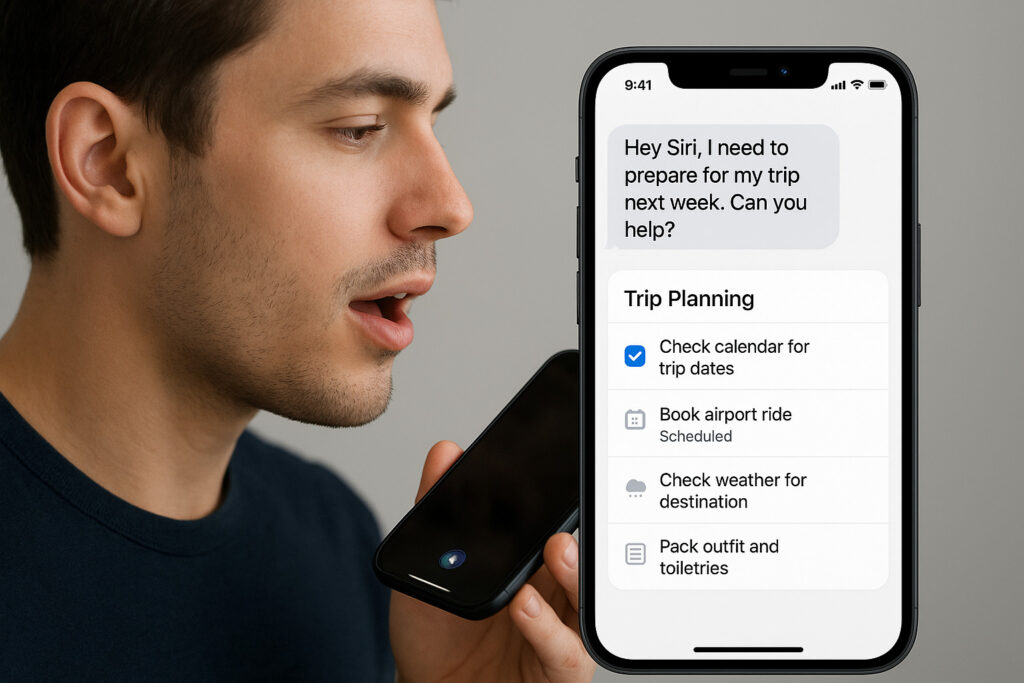
Imagine this: You wake up and say, “Hey Siri, plan my Saturday.” Within seconds, it arranges yoga at 9, blocks travel time to the grocery store, and even reminds you to pick up a cake for your book club. That’s Apple’s vision of AI—less about showing off, more about making your day easier.
Or picture writing an important email. Instead of drafting from scratch, Apple’s Writing Tools summarize your thoughts into a polite, professional message. You tweak it, hit send, and save 15 minutes.
This is “modern AI” in action—quietly powerful, highly personal.
FAQs About Apple AI Strategy
-
What is Apple’s AI strategy in simple terms?
Apple wants to make AI practical, private, and built directly into your devices. -
Why did Tim Cook say Apple is rarely first?
Apple prefers to polish technology rather than rush it. -
What does “modern AI” mean for Apple?
It means AI that feels natural and useful in daily life. -
Will Siri actually improve?
Yes, Siri is being rebuilt with better context and actions. -
What is Private Cloud Compute?
It’s Apple’s privacy-focused cloud for running bigger AI tasks. -
How is Apple different from Google and Microsoft?
Apple focuses on privacy and integration; Google/Microsoft push cloud scale and productivity. -
Will Apple AI be free?
Most system features will be free, bundled with devices. -
Which devices will support Apple Intelligence?
iPhone 15 Pro/Max, iPhone 16, iPads, and Macs with M1 chips or newer. -
Does Apple use ChatGPT?
Yes, in some cases, Siri can connect to ChatGPT with your permission. -
Can I turn Apple AI off?
Yes, Apple gives users control over features and data-sharing.
Conclusion: The Quiet Power of Apple’s AI 🚀
Apple’s AI strategy isn’t about racing to be first—it’s about redefining what normal feels like. Just like the iPhone made the smartphone mainstream, Apple now wants AI to blend so seamlessly into your life that you stop calling it AI at all. It’ll just be… your phone, your Mac, your assistant, doing more for you.
So here’s the real question: when AI finally becomes invisible, will we even notice it’s there—or will we simply wonder how we ever lived without it?
👉 Call-to-Action: What’s your take—do you trust Apple’s privacy-first AI approach, or do you think they’re already too late? Share your thoughts in the comments below!