
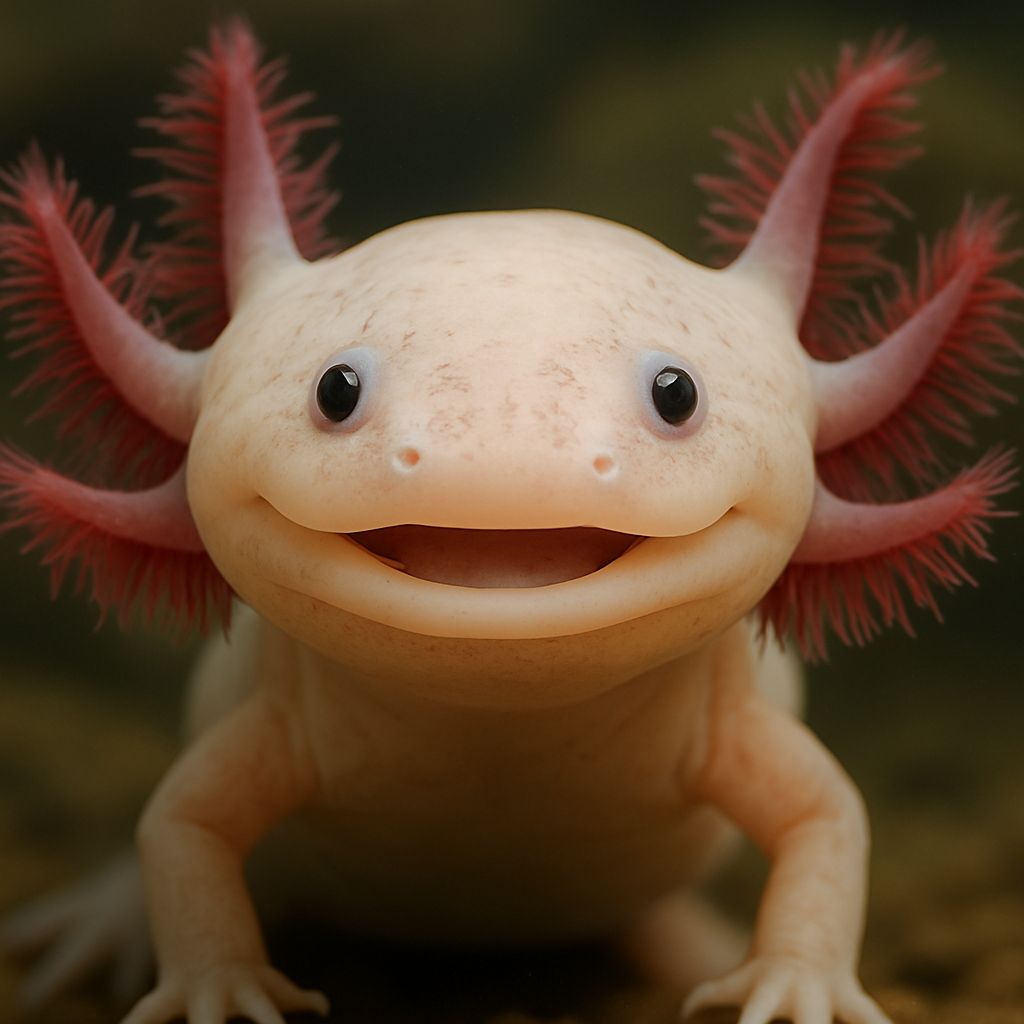
🧬 Axolotl Limb Regeneration: Could These Salamanders Help Humans Regrow Limbs?
Let’s dive into the fascinating science of Axolotl Limb Regeneration, a breakthrough area of study that’s quickly shifting from salamander secrets to human hope. Whether you’re a curious reader or someone dreaming of next-gen medical miracles, understanding Axolotl Limb Regeneration is your first step into the future of healing.
👉 Is this something you want to search the entire internet for, analyze it, and separate it from everyone else?
After analyzing everything across the internet and gathering real-world insights, the Bhussan.com team shares this friendly, helpful article.
Let’s dive into the fascinating science of limb regeneration and why axolotls might be the key to helping humans heal like never before.
🦎 Meet the Axolotl: Nature’s Cutest Regeneration Expert
You’ve probably seen their smiley little faces online—pink gills, cartoonish eyes, and a goofy grin. But behind that cuteness is a regenerative power that would make Wolverine jealous.
Axolotls, also known as Ambystoma mexicanum, can regrow entire limbs, parts of their brain, heart tissue, and even their spinal cord. Yes, really.
What makes this creature even more fascinating is that it doesn’t scar. While humans close wounds with thick collagen-rich scars, axolotls reset their biology and rebuild what’s lost.
🧠 Quick facts:
-
Native to Mexico
-
Known as “perpetual larvae” (they don’t undergo full metamorphosis)
-
Can live over 15 years in captivity
-
They are critically endangered in the wild
🧪 The Big Question: How Does an Axolotl Know What to Regrow?
One of the biggest puzzles in regeneration science has been figuring out how an axolotl knows what part to regrow. If it loses a hand, how does it not regrow a full arm? This is where Dr. James Monaghan and his research team at Northeastern University come in.
He recently tackled a question that’s stumped scientists for over 200 years: Where does positional memory come from?
The answer? A tiny, mighty molecule called retinoic acid (RA).
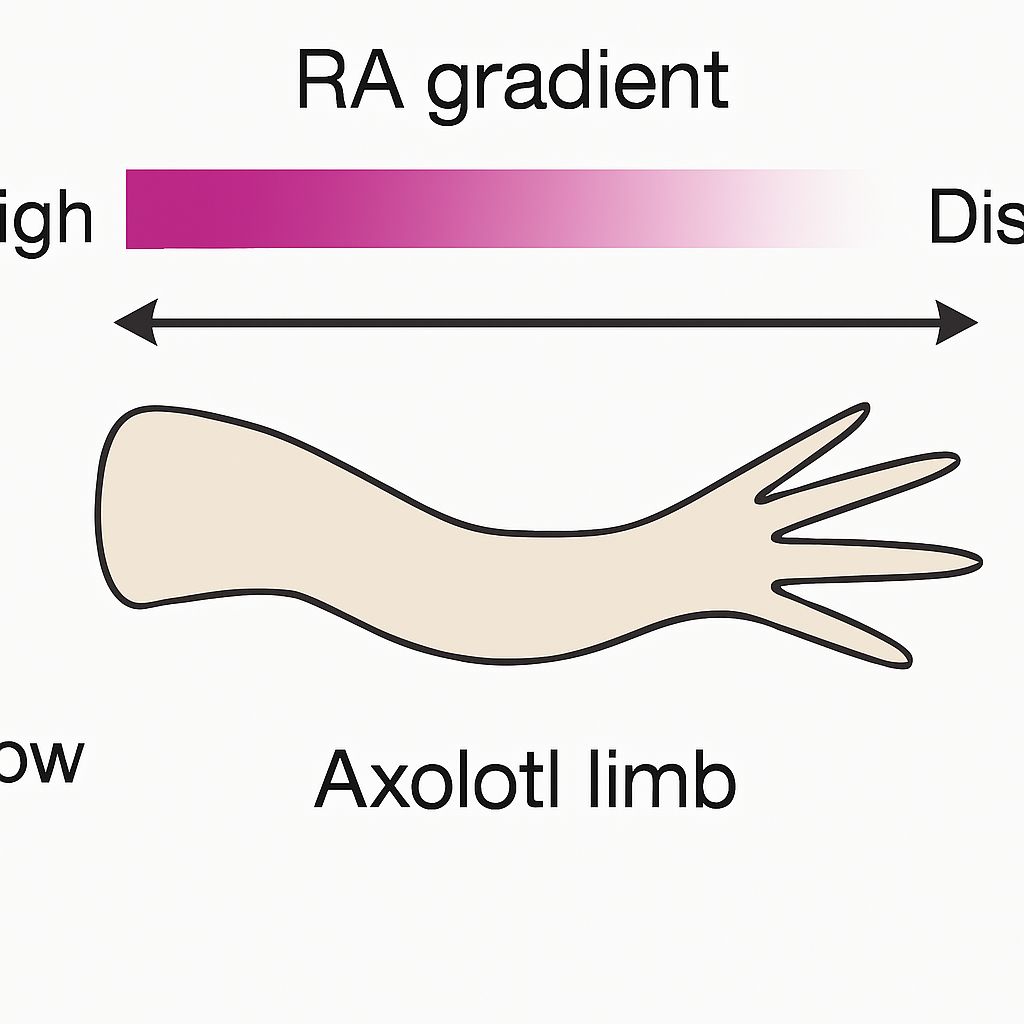
RA is a derivative of vitamin A that helps developing embryos grow properly. But in axolotls, it acts like a GPS, telling cells what body part to rebuild.
Dr. Monaghan discovered:
-
Axolotls have more RA near their shoulders and less near their hands.
-
An enzyme called CYP26B1 breaks down RA the further it moves from the body.
-
This creates a gradient, like a slope of signals from shoulder to hand.
So, when a limb is lost, the axolotl’s fibroblasts (a type of cell involved in healing) read the gradient and say: “Ah, I’m at the elbow, time to build a hand.”
🧬 Gene Editing and Retinoic Acid: Playing Frankenstein
To test his theory, Dr. Monaghan and his team conducted what he called “pretty Frankensteiny” experiments:
-
They increased RA levels in an axolotl’s hand.
-
Result? The axolotl grew an extra arm where there should’ve been only a hand!
This proves that positional signals like RA don’t just help in rebuilding—they tell the body how much to rebuild.
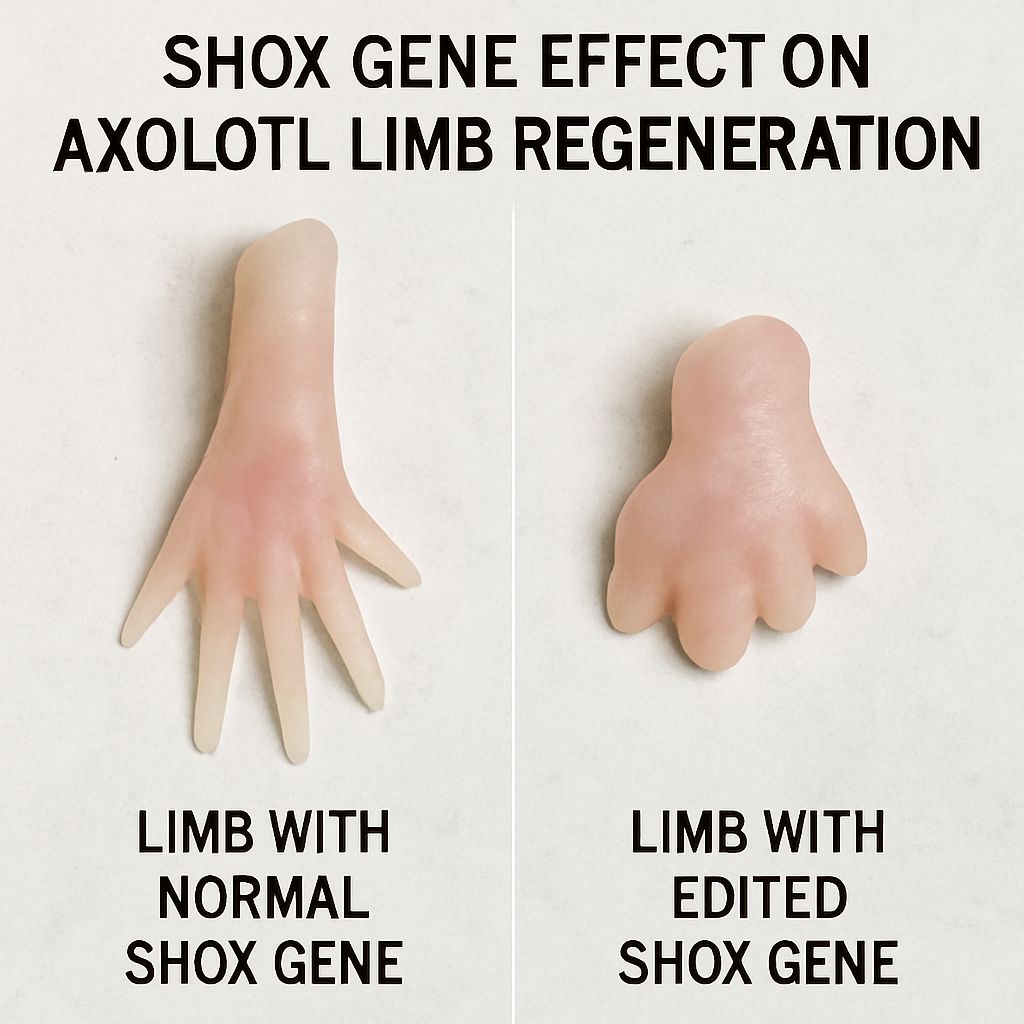
Then they used CRISPR-Cas9 gene editing to remove a gene called shox (short homeobox gene). It turns out:
-
Shox is crucial for forming long bones.
-
Without it, the axolotls grew tiny, stumpy arms, though hands were still normal-sized.
Coincidentally, in humans, mutations in SHOX lead to skeletal abnormalities, too.
👉 Why does this matter?
If we can manipulate RA and shox in human cells, we might one day guide our body to regenerate lost limbs accurately.
🧑⚕️ Can Humans Regrow Limbs Too?
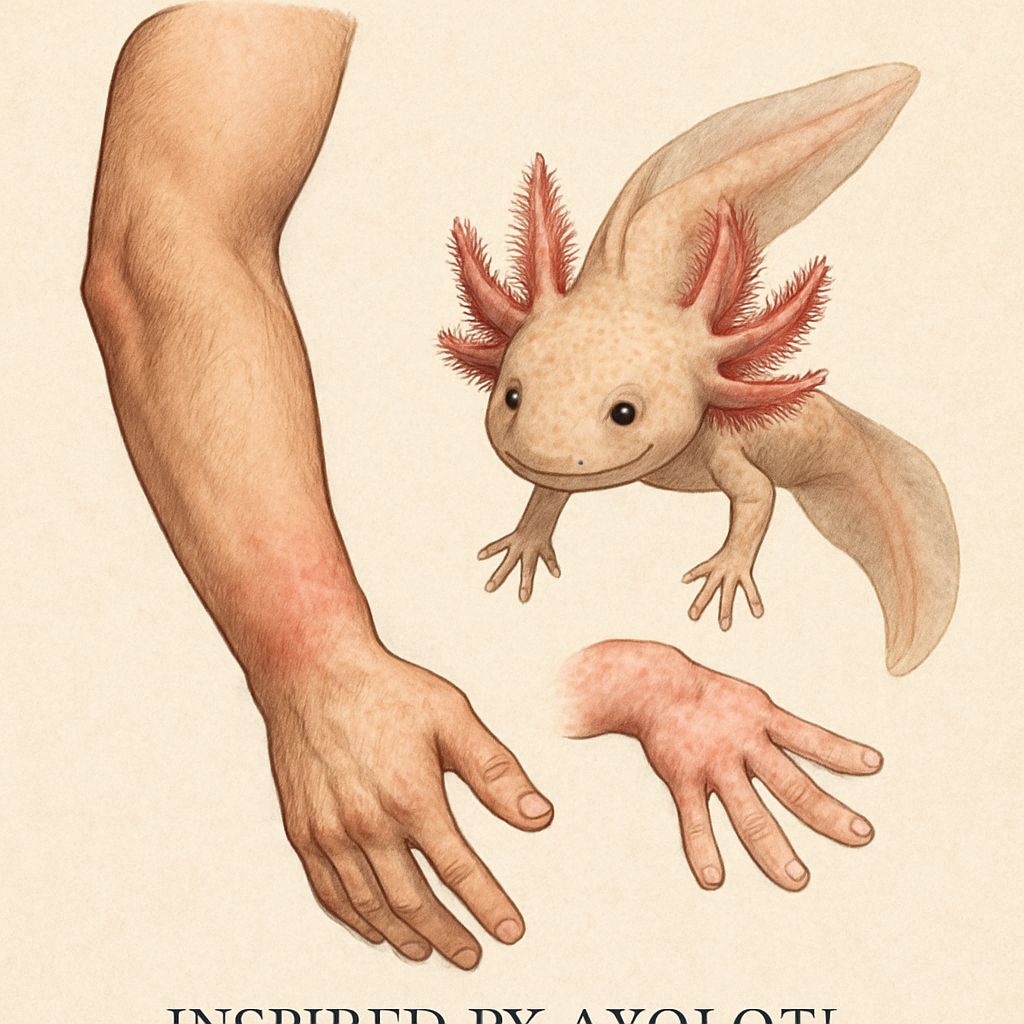
Alright, let’s bring it home. What does this mean for you and me?
Humans do have retinoic acid. We even use it in acne meds like retinol. And we have fibroblasts, which help close wounds. But here’s the problem:
-
Our fibroblasts go into scar mode.
-
Axolotls? Their fibroblasts go into rebuild mode.
Dr. Monaghan believes the key is to teach our cells to “listen” to RA just like axolotl cells do.
“If we can make our fibroblasts listen to these regenerative cues, they’ll do the rest.” – Dr. James Monaghan
What needs to happen:
-
Find out what genes RA activates in human fibroblasts
-
Understand why human cells ignore these regenerative signals
-
Build treatments that rewire our injury response
This isn’t a one-step solution. But it’s no longer science fiction.
🔍 What Is Axolotl Limb Regeneration?
Axolotl Limb Regeneration refers to the salamander’s incredible ability to regrow entire limbs—including bones, muscles, skin, and even nerves—without forming scars. Unlike human healing, which prioritizes speed over precision, axolotls use signals like retinoic acid and enzymes like CYP26B1 to accurately rebuild what was lost. This process is being studied closely by scientists like Dr. Monaghan as a potential model for human regenerative medicine.
✅ Pros & Cons of Axolotl-Based Regeneration Science
| Pros | Cons |
|---|---|
| Unlocks regeneration pathways in humans | Still early in research |
| Builds on shared biology (RA, shox, fibroblasts) | Complex ethics and testing barriers |
| Potential treatments for scarring, amputation | May require gene editing in humans |
| No rejection issues (uses the body’s cells) | Unknown long-term effects |
| Axolotl Limb Regeneration vs. Human Healing: Can We Regrow Limbs Too? |
“Can Humans Regrow Limbs Too?” |
| How Axolotl Limb Regeneration Knows Exactly What to Regrow | The Big Question: How Does an Axolotl Know What to Regrow? |
❓ 30+ Frequently Asked Questions (FAQs)
1. What makes axolotls special for regeneration?
Axolotls aren’t just cute—they’re biological wizards. Unlike humans, they don’t scar. Instead, their cells, especially fibroblasts, go into rebuild mode. They reform skin, muscles, blood vessels—even bones—without leaving a mark. Their ability to regenerate comes from precise cellular coordination and retinoic acid (RA) signaling that acts like a GPS.
2. an axolotls regrow hearts and spinal cords, too?
Yes! Axolotls can regenerate parts of their heart, spinal cord, and even brain tissue. After injury, their cells de-differentiate (go back to a stem-cell-like state), rebuild what’s needed, and integrate it perfectly into existing tissue. No scar, no drama.
3. How does retinoic acid work in axolotls?
Retinoic acid (RA) acts like a body map. It tells axolotl cells where they are along the limb, guiding accurate regrowth. More RA means you’re closer to the shoulder; less RA, you’re closer to the hand. It’s brilliant biological navigation.
4. Do humans have retinoic acid?
We do! Humans naturally produce retinoic acid during embryonic development and wound healing. It’s also in acne medications like retinol. But our cells don’t use it for regeneration like axolotls do—yet.
5. What is CYP26 B1, and why is it important?
CYP26B1 is an enzyme that breaks down RA. In axolotls, it creates a gradient of RA from shoulder to fingertip, helping the body determine what to regrow. Without it, the GPS system goes haywire.
6. What does the shox gene do?
The shox gene controls bone length and shape. In axolotls, deleting it results in tiny, malformed limbs. In humans, mutations in SHOX cause short stature and bone deformities. It’s a major player in limb development.
7. How does RA affect regeneration accuracy?
RA provides positional memory. If there’s too much RA in the hand, the body might mistakenly think it’s the shoulder and regrow an entire arm. Controlled RA levels = accurate regeneration.
8. Can humans be injected with RA to regrow limbs?
Not directly—yet. RA is powerful and can cause birth defects or abnormal growth if misused. The idea is to train human cells to respond to RA like axolotl cells do. That’s the safer, smarter path.
9. Is CRISPR safe for human gene editing?
CRISPR shows promise but comes with risks like off-target mutations. It’s not a magic wand, but scientists are working on more precise versions. So far, limited human trials have been successful in treating diseases like sickle cell anemia.
10. Are there any existing human trials?
There are no trials yet for limb regeneration, but CRISPR, stem cells, and RA are being studied in wound healing and organ repair. We’re still a few steps away, but research is moving fast.
11. Could this help with burns or scars?
Absolutely! Since axolotls don’t scar, learning from them could help us reduce or eliminate scarring in humans. Imagine a burn healing without leaving a trace. That’s the dream.
12. Why do humans form scars instead of limbs?
Because our fibroblasts play it safe. Instead of rebuilding, they seal the wound with collagen (scar tissue). It’s fast and efficient, but it stops regrowth.
13. Is there any treatment now based on this research?
Some early-stage wound care treatments are exploring RA and fibroblast manipulation, but nothing commercial yet. The groundwork is being laid.
12. Are there any ethical concerns with this approach?
Yes, especially with gene editing in humans. Safety, informed consent, and long-term impacts are key concerns. But when done responsibly, the benefits could outweigh the risks.
13. How do axolotls avoid immune rejection?
Axolotls regenerate using their cells, not transplants. That means no immune rejection. Scientists hope to mimic this by using a person’s cells for human therapies.
14. Are axolotls used in other medical studies?
Yes! Axolotls are used in cancer research, neuroscience, and developmental biology. Their transparent skin and regenerative powers make them perfect for observing internal processes in real time.
15. What other animals can regenerate?
Other regeneration champs include:
-
Planarian worms can regrow an entire body from a sliver
-
Starfish – regrow arms
-
Deer – regrow antlers annually
-
Zebrafish can regrow heart tissue
16. Can humans ever grow back full fingers?
Possibly! Kids under 6 have been known to regrow fingertip tissue. If we crack the RA and positional memory code, full finger regeneration might be in reach.
17. What is a blastema?
A blastema is a cluster of undifferentiated cells formed after injury. It’s a regeneration hub, where cells turn into whatever’s needed—skin, muscle, bone, you name it.
18. Are fibroblasts used in medical treatments?
Yes! Fibroblasts are used in cosmetic skin procedures, wound healing, and research. If we can reprogram them like axolotls do, they might unlock regenerative therapies.
19. What is the next step for Dr. Monaghan’s research?
He’s now working on getting human fibroblasts to respond to RA like axolotls. The goal is to mimic the GPS-like system in human cells. This could be the turning point for regenerative medicine.
20. How long before this becomes mainstream medicine?
We’re likely 10–20 years away from full human application. But progress in wound healing and scar reduction might happen sooner, within 5–10 years.
21. Will this be expensive?
At first, yes. Regenerative therapies involving gene editing or RA modulation may cost a lot. But as techniques scale, prices will drop, just like they did for genome sequencing.
22. Is vitamin A safe to use in this context?
In normal doses, yes. But RA (derived from vitamin A) must be handled with care. Too much can lead to toxicity or birth defects. It’s not something to DIY.
23. Do axolotls feel pain when regrowing limbs?
We don’t know for sure, but they don’t seem to show distress during regeneration. It’s likely a much less painful process than what humans experience after injury.
24. Can children regenerate better than adults?
Yes! Children’s cells are more plastic and adaptable. Some can regrow fingertips under age 6. That’s why early intervention in regenerative therapies might work better for young patients.
25. Could this help amputees in war zones?
That’s the goal. If successful, regenerative medicine could offer alternatives to prosthetics for soldiers and civilians who’ve lost limbs due to conflict or injury.
26. Are there drugs to activate SHOX in humans?
Not directly, but gene therapies and CRISPR might target SHOX in the future to regulate bone growth. It’s still experimental.
27. What are the side effects of too much RA?
Too much RA can cause:
-
Nausea
-
Liver toxicity
-
Birth defects
-
Abnormal tissue growth
That’s why controlled dosing and targeting is critical.
28. Can we regenerate organs like the heart?
Some animals can (like zebrafish and axolotls). Human heart regeneration is in early research. Using RA signaling pathways might help us get there one day.
29. What role does the immune system play?
In humans, immune cells often promote scarring. In axolotls, immune cells support regeneration. The trick may be tweaking our immune response to copy theirs.
30. Will prosthetics become obsolete?
Maybe not completely, but if regeneration becomes safe and reliable, prosthetics could take a back seat. Imagine regrowing a leg instead of replacing it with metal.
31. Can we regenerate cartilage this way?
Yes, potentially. Cartilage is tough to heal, but with RA modulation and stem cells, cartilage regeneration is a strong candidate for early application.
32. Could cancer be a risk from this pathway?
Unfortunately, yes. Regeneration involves cell growth and division, which are also features of cancer. That’s why scientists must tightly control regeneration pathways to avoid risks.
33. What makes axolotls special for regeneration?
Axolotl Limb Regeneration is unique because these creatures don’t just heal—they rebuild. Unlike humans, who form scar tissue…
34. Could this help with burns or scars?
Insights from Axolotl Limb Regeneration could directly impact how doctors treat severe burns and scarring in humans…
🔚 Conclusion: Will Axolotls Inspire Human Healing?
From playful aquarium stars to scientific superheroes, Axolotl Limb Regeneration is guiding us toward something once thought impossible: regrowing lost human limbs.
Dr. Monaghan’s work is proof that biology has not yet revealed all its secrets—and with the right signals, our bodies may one day rebuild what was lost.
So the next time you see a smiley little axolotl, remember—it might just hold the blueprint for humanity’s future.
👉 What are your thoughts on this science? Would you try a regenerative therapy if it were safe?
Let’s talk in the comments!