Is This Something You Want to Search the Entire Internet For?
If you’re anything like me, you’ve probably found yourself knee-deep in headlines and hot takes every time there’s tension between India and Pakistan. But here’s the million-dollar question that keeps coming up: “Can India really stop the river water from flowing into Pakistan?”
Water is life. And in South Asia, it’s also politics, power, and sometimes, provocation. So buckle in, my friend. After analyzing everything across the internet and gathering real-world insights, the Bhussan.com team shares this friendly, helpful article that unpacks the truth behind this complex topic — and why it matters more than ever in the India-Pakistan River Water Conflict.
Quick Background: What Is the Indus Waters Treaty?📃
Let’s rewind to 1960. India and Pakistan were fresh into their post-partition era, and things were tense. Enter: The Indus Waters Treaty (IWT), a World Bank-brokered agreement designed to prevent water wars.
Here’s what it says:
-
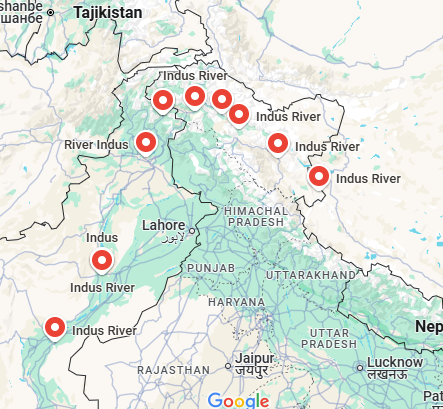
India gets the Eastern Rivers — Ravi, Beas, and Sutlej.
-
Pakistan gets the Western Rivers — Indus, Jhelum, and Chenab.
-
India can use the Western rivers in limited ways: irrigation, hydropower (without storage), and non-consumptive use.
So far, it’s been one of the most successful water treaties globally. Despite wars, nuclear standoffs, and cricket clashes, the treaty has held strong through the India-Pakistan River Water Conflict.
Can India Legally Block Water to Pakistan?⚡
Short answer: No — at least not according to the treaty.
But (and it’s a big but)… India does have room to maximize its water use within the treaty.
Let me break it down:
-
India can build run-of-the-river hydro projects that don’t store large quantities of water.
-
It can also divert some water for irrigation, drinking, or industrial use from the Eastern rivers.
-
But it can’t obstruct, store, or divert water from the Western rivers in a way that harms Pakistan.
So while India can’t “block” water outright, it can tighten the taps by increasing usage on its side — a significant part of the India-Pakistan River Water Conflict debate.
Why Would India Threaten This?🌪
Politics, plain and simple.
Every time tensions rise — whether it’s after a terrorist attack like Uri (2016) or Pulwama (2019) — you might hear Indian leaders talking tough: “Blood and water can’t flow together.”
But this isn’t just bravado. It’s a diplomatic tool. By dangling the threat of stricter water control, India tries to pressure Pakistan without firing a shot.
Of course, that brings global attention, media frenzy, and a whole lot of fear in Pakistan — all feeding into the ongoing India-Pakistan River Water Conflict.
What Would Happen If India Actually Blocked Water?🌊
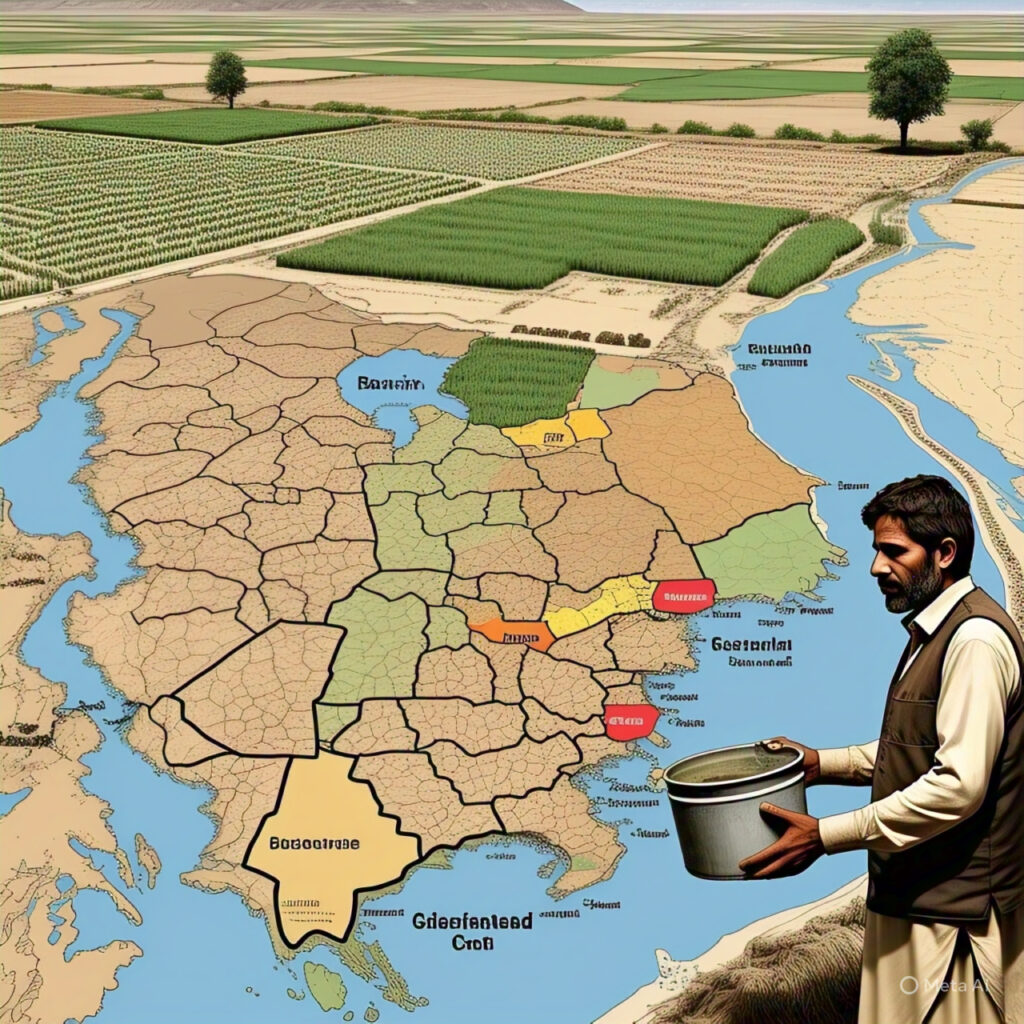
If India found a way to severely reduce water flow, the consequences for Pakistan could be devastating.
🌾 Agriculture:
-
Pakistan’s Punjab and Sindh provinces depend heavily on Indus waters for crops like wheat, sugarcane, and rice.
-
Even a temporary reduction could cripple food security.
🚀 Power and Economy:
-
Hydropower plants on the Jhelum and Chenab would take a hit.
-
This would strain an already fragile energy grid.
🌦️ Water Supply:
-
Urban areas like Lahore and Karachi could face drinking water shortages.
-
Rural areas would be even worse off.
It would essentially be a humanitarian crisis — a worst-case outcome of the India Pakistan River Water Conflict.
What Does the World Think?🌍
The World Bank still plays a quiet but crucial role as a mediator.
-
International observers often see the Indus Waters Treaty as a model agreement.
-
If India breaches it, it’s not just Pakistan that’s watching — global trust in water diplomacy could take a hit.
And don’t forget: climate change is already reducing water availability across the region. Disruption now could trigger cross-border instability for generations.
Pros and Cons of India Using Its Full Treaty Rights✅
| Pros | Cons |
|---|---|
| Boosts India’s water security for agriculture and hydropower | Could inflame tensions with Pakistan |
| Creates leverage in diplomatic negotiations | Risk of international backlash and legal disputes |
| Encourages infrastructure development | Potential for a humanitarian crisis in Pakistan |
| Within the legal bounds of the treaty | It may be perceived as an act of aggression, damaging India’s global image |
30+ FAQ: India-Pakistan River Conflict & Indus Waters Treaty📊
Q1. What is the Indus Waters Treaty?
A: It’s a 1960 water-sharing agreement between India and Pakistan, brokered by the World Bank.
Q2. Which rivers are included in the Indus Waters Treaty?
A: The treaty covers six rivers: Indus, Jhelum, Chenab, Ravi, Beas, and Sutlej.
Q3. Who controls which rivers under the treaty?
A: India controls the eastern rivers (Ravi, Beas, Sutlej), while Pakistan controls the western rivers (Indus, Jhelum, Chenab).
Q4. Can India legally stop water from flowing into Pakistan?
A: No, but it can use water within treaty limits for hydropower, irrigation, and non-consumptive uses.
Q5. Why is there tension over the Indus Waters Treaty?
A: Political conflicts and national security issues intensify water-related disagreements.
Q6. Has India ever violated the treaty?
A: No official violation has been proven, though Pakistan has raised objections to some Indian dam projects.
Q7. How does climate change affect the treaty?
A: It increases water scarcity, glacier melt, and changes river flows, stressing the agreement.
Q8. What are run-of-the-river projects?
A: Hydroelectric projects that don’t store large amounts of water; permitted under the treaty.
Q9. What role does the World Bank play today?
A: It acts as a mediator when disputes arise between India and Pakistan.
Q10. Could India unilaterally withdraw from the treaty?
A: It’s theoretically possible, but it would invite global backlash and legal consequences.
Q11. How dependent is Pakistan on the Indus water?
A: Extremely — nearly 80% of its agriculture relies on it.
Q12. What is Pakistan’s main concern?
A: The Indian infrastructure projects will reduce or delay the water flow.
Q13. How much water does India currently use?
A: India doesn’t fully utilize its share under the treaty, especially on the eastern rivers.
Q14. Is there room for cooperation instead of conflict?
A: Yes. Joint management and climate action can ease tensions.
Q15. How does water scarcity impact national security?
A: Scarcity can lead to unrest, migration, and conflict over essential resources.
Q16. Have there been successful negotiations recently?
A: Some diplomatic talks have occurred, but no major updates in recent years.
Q17. How often is the treaty reviewed?
A: There’s no formal review period, but disputes can trigger technical meetings.
Q18. Can other countries get involved?
A: Generally no, unless a mediator like the World Bank is officially called in.
Q19. What is the Kishanganga Project?
A: A contested Indian hydro project on a tributary of the Jhelum River.
Q20. What is the Baglihar Dam controversy?
A: Pakistan objected to this Indian dam; the World Bank allowed it with design changes.
Q21. How does water flow monitoring work?
A: Both countries share data regularly, and inspections are part of the protocol.
Q22. Is Pakistan building dams too?
A: Yes, but at a slower pace due to funding and political issues.
Q23. How does population growth affect the treaty?
A: More people mean more demand for water, increasing pressure on shared resources.
Q24. What if a major drought hits the region?
A: It would strain both nations and likely lead to emergency talks.
Q25. Could cyber attacks affect water management?
A: Theoretically, yes — digital infrastructure is vulnerable in modern water systems.
Q26. What are India’s rights under the treaty?
A: Full use of eastern rivers and limited use of western rivers.
Q27. What are Pakistan’s rights under the treaty?
A: Full flow of western rivers and data-sharing rights.
Q28. Is the treaty fair?
A: Opinions vary. India feels it gave too much; Pakistan calls it vital for survival.
Q29. Will the treaty last another 50 years?
A: Only if both nations commit to cooperation despite challenges.
Q30. What can individuals do to help?
A: Raise awareness, conserve water, and support peaceful solutions.
[Image Suggestion: Friendly visual Q&A graphic showing top FAQs about the treaty | Alt Text: FAQs India Pakistan River Water Conflict]
Conclusion: Can India Do It? Should It?
So here’s the honest truth: India can increase its water use within treaty limits. But completely stopping water? Not legally. Not without consequences.
Water should never be used as a weapon. It’s too essential, too human. And in a time when climate change is already squeezing rivers dry, the answer isn’t conflict — it’s cooperation.
Let’s hope cooler heads prevail in the India-Pakistan River Water Conflict.