

India’s First Gene-Edited Sheep: 7 Shocking Facts That Will Transform Indian Agriculture 🐑🧬
What If India’s First Gene-Edited Sheep Could Revolutionize Farming Forever?🧠
India’s First Gene-Edited Sheep has been successfully created by researchers at Sher-e-Kashmir University of Agricultural Sciences and Technology (SKUAST-Kashmir), marking a historic milestone in India’s biotechnology landscape. This isn’t just any scientific development—it’s the birth of a revolutionary leap in livestock genetics. Using CRISPR-Cas9 gene-editing technology, the team produced a lamb with a targeted mutation in the myostatin gene, resulting in a jaw-dropping 30% increase in muscle mass. 💪🐑
Think it’s a gimmick? 🤔 Well, India’s latest scientific achievement isn’t just a lab trick—it’s a real, living sheep born at Sher-e-Kashmir University of Agricultural Sciences and Technology (SKUAST-Kashmir).
👉 After analyzing everything across the internet and gathering real-world insights, the Bhussan.com team shares this friendly, helpful article that breaks down India’s First Gene-Edited Sheep in plain human language.
India’s Gene-Edited Sheep T1 || Credit: YouTube/ Satya Hindi सत्य हिन्दी
🔬 What Makes India’s First Gene-Edited Sheep So Special?
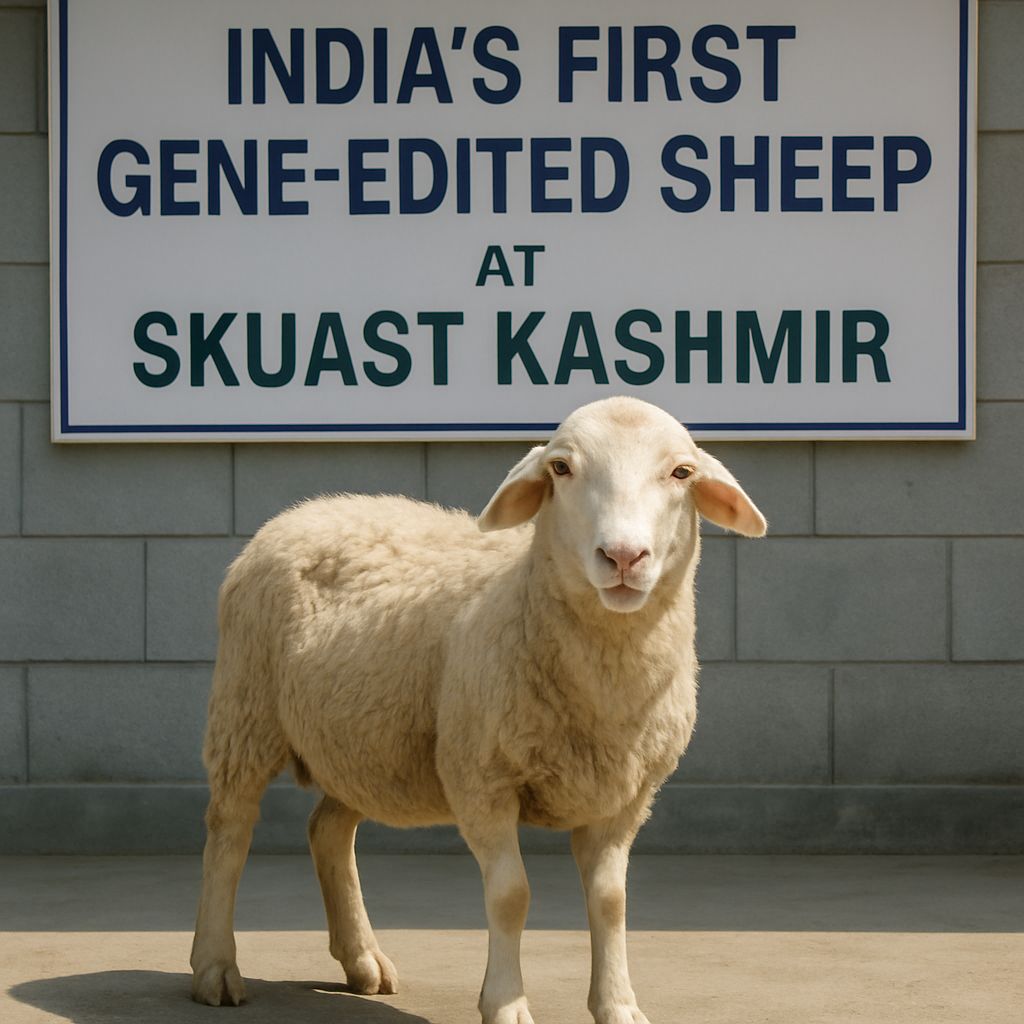
This isn’t your average sheep. This is India’s first gene-edited sheep, created using CRISPR-Cas9, a Nobel Prize-winning gene editing technology. 🎯
The target? The myostatin gene, which usually puts the brakes on muscle growth. Scientists snipped it off, and voilà—our lamb gained nearly 30% more muscle!
“This is not just the birth of a lamb—it’s the birth of a new era in livestock genetics in India.”
— Dr. Nazir Ahmad Ganai, Vice Chancellor, SKUAST-Kashmir
🏛️ The University Behind This: SKUAST-Kashmir’s Legacy in Animal Genetics 🧬

Back in 2012, SKUAST gave India its first cloned Pashmina goat—“Noori”. Fast forward to 2025, and they’re at it again—this time with the first gene-edited sheep in India.
What Sets SKUAST Apart:
-
Operates under global biosafety norms
-
Built India’s Centre for Animal Biotechnology
-
Plans to launch India’s most advanced reproductive biotech centre
🚀 How CRISPR Helped Create India’s First Gene-Edited Sheep
CRISPR-Cas9 isn’t magic—it’s cutting-edge science. Scientists use it to “cut” and “edit” genes with high precision.
🧪 This gene-edited lamb carries no foreign DNA, making it non-GMO and potentially regulatory-friendly under India’s biotech rules.
Why CRISPR Works:
-
Precise edits (like Photoshop, but for DNA 🧬)
-
Safe and ethical when used properly
-
Already used in treating human diseases like HIV, cancer, and sickle cell
🌾 India’s First Gene-Edited Sheep: A Boon for Agriculture?
Yes! Here’s how this innovation can change the game for Indian farmers:
Benefits for Indian Agriculture:
-
Higher meat yield from fewer animals
-
Better feed efficiency = lower costs
-
Indigenous breeds improved without importing foreign animals
-
Climate-resilient sheep breeds for harsh terrains
“With gene editing, we can make precise, beneficial changes—without introducing foreign DNA.”
— Dr. Nazir Ganai
Pros & Cons Table of India’s First Gene-Edited Sheep
| Pros | Cons |
|---|---|
| 30% More Muscle Mass | Needs wider public awareness |
| Not GMO, No Foreign DNA | High-tech equipment needed |
| Follows global biosafety standards | Regulatory approval still evolving |
| Ideal for improving Indian breeds | Costly for small farmers initially |
❓ 30+ FAQs on India’s First Gene-Edited Sheep
-
What is gene editing in animals?
It’s altering specific genes to enhance traits like muscle growth or disease resistance. -
What is CRISPR?
A tool used to precisely cut and modify DNA. -
What gene was edited in the sheep?
The myostatin gene regulates muscle growth. -
How much more muscle does it have?
Up to 30% more than normal sheep. -
Is this a GMO animal?
No—it contains no foreign DNA. -
Was this sheep born in India?
Yes, at SKUAST-Kashmir. -
Is this legal in India?
It complies with international biosafety standards. -
Who led this research?
Dr. Riyaz A Shah and team at SKUAST. -
What is myostatin?
A protein that stops muscle growth. -
Does this sheep look different?
Yes, more muscular. -
Is this safe to eat?
Early signs suggest yes, but regulations will decide. -
Can farmers buy such sheep?
Not yet—still in research phase. -
Is this used in other countries?
Yes, countries like the US, UK, and China use CRISPR in livestock. -
Can this tech reduce feed costs?
Yes—more meat per gram of feed. -
Will this affect wool quality?
No, only muscle genes are altered. -
Can it increase farm income?
Likely, with better yield and quality. -
Are there other gene-edited animals?
Chickens, pigs, and cows are in trials globally. -
Did this receive government recognition?
Yes, Lieutenant Governor Manoj Sinha praised it. -
Can this help reduce food imports?
Yes—if scaled up. -
Is this ethical?
With no foreign DNA and strict rules, yes. -
Can this tech prevent animal disease?
With gene edits, yes—future possibilities are being explored. -
Is this costly tech?
Initially, yes, but prices drop as adoption rises. -
Does CRISPR have side effects?
Minimal if done correctly. -
What’s SKUAST’s next goal?
Vaccine development, stem cells, cloning, and more. -
Will this tech reach small farmers?
With government support, likely yes. -
Is this a one-time experiment?
No—it’s the first step in a large-scale biotech plan. -
How old is this lamb?
Born in 2025. -
Does it breed like normal sheep?
That’s part of the ongoing trials. -
Are CRISPR-edited crops already in India?
Yes—like the recent gene-edited rice. -
What’s the big takeaway?
India’s First Gene-Edited Sheep is a major step toward biotech-led food security.
Final Thoughts: Why This Lamb is Bigger Than It Looks 🔚
This isn’t just a fluff piece about a sheep. This is India rewriting the future of food and farming.
💬 From boosting meat yield to making climate-ready animals, India’s First Gene-Edited Sheep is a glowing example of science working with tradition to build a stronger tomorrow.
🔔 Call to Action:
Like learning about breakthroughs like this? Subscribe to Bhussan.com, share this article, or comment with your thoughts. Let’s build an informed India together!
External Link: Nature article on CRISPR