

💥 Introduction: The $100M Question — Is It Really About the Salary?
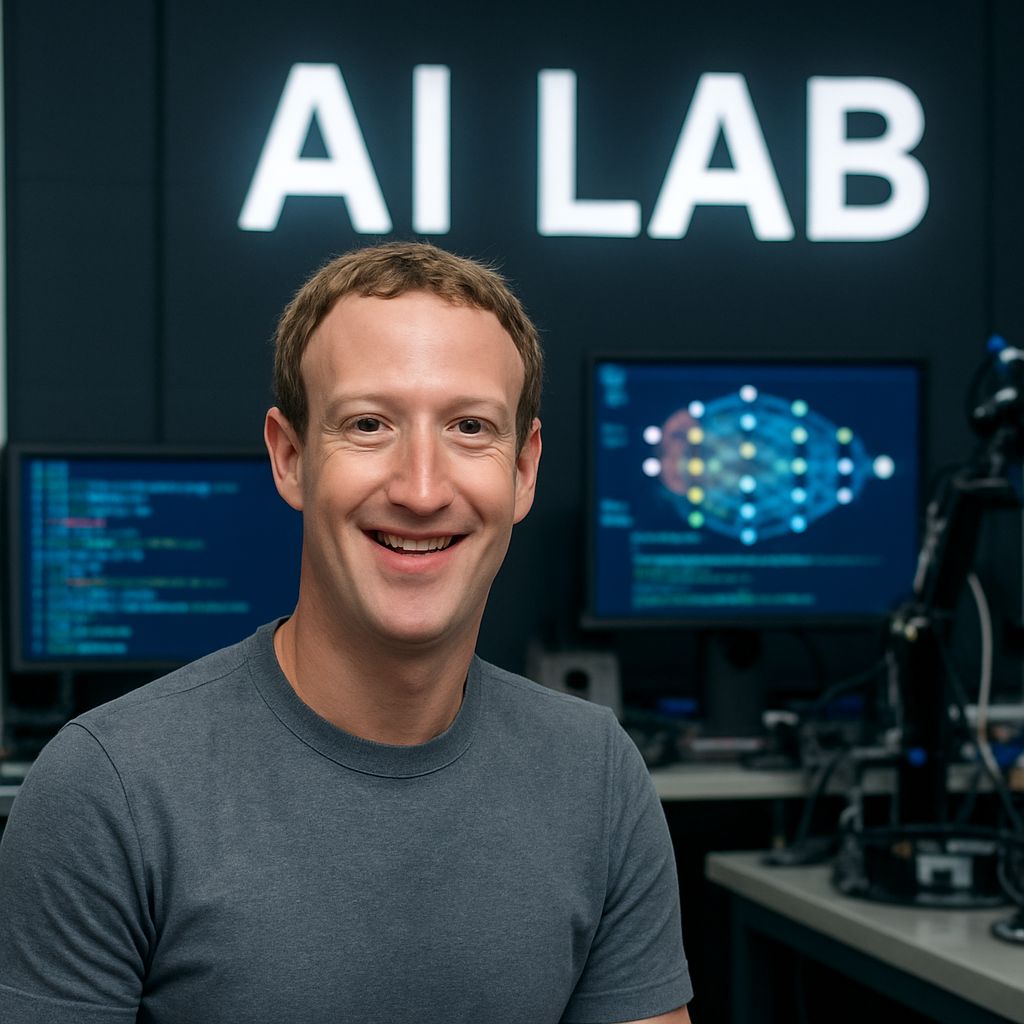
Let’s start with a wild one: Would you take a $100 million offer to switch jobs if you knew money wasn’t the only thing that mattered?
This is the premise behind the Meta AI Hiring Strategy—but according to Mark Zuckerberg, the real motivator for researchers isn’t just money.
Now imagine being one of the top AI brains on the planet—recruited by Meta, offered everything from private jet perks to insane GPU access. Sounds like a dream, right?
But here’s the twist.
Meta CEO Mark Zuckerberg recently dismissed the notion that people join Meta solely for the generous compensation. “LoL, that’s mostly false,” he said.
So if it’s not the cash… what is it?
After analyzing everything across the internet and gathering real-world insights, the Bhussan.com team shares this friendly, helpful article to decode what’s really going on.
Let’s break it down together—human to human.
🤖 Section 1: What’s Luring Top AI Talent to Meta?
Zuckerberg didn’t just say people weren’t coming for the money—he clarified what they do want.
🧩 Here are the two things top AI researchers prioritize:
-
The Meta AI Hiring Strategy: “The fewest number of people reporting to me”
Basically, they don’t want red tape. No endless meetings. No top-down micromanagement. Just autonomy and freedom to innovate. -
The Meta AI Hiring Strategy “The most GPUs” (aka unlimited compute power)
AI models today require immense computational power. We’re talking millions of dollars’ worth of GPUs just to train one model. Meta is offering these researchers “infinite GPUs”, and that’s a bigger deal than any paycheck.
🔥 In short: They want freedom + firepower. Not just fancy job titles and big bonuses.
And honestly, can you blame them?
💡 External DoFollow Source:
Meta’s AI infrastructure explained via Moneycontrol
💼 Section 2: Yes, Meta Is Paying Insane Money Too — But There’s More to It
Okay, let’s address the elephant in the room.
Meta is offering $100M+ total packages for some top-tier hires.
-
💸 Base pay + equity often hits $1.2M to $1.4M/year
-
🎁 Signing bonuses in the $10–$50M range (some even $100M!)
-
🛫 Luxury perks like meetings at Zuckerberg’s Lake Tahoe home or direct DMs from Zuck himself
But guess what? Money isn’t everything—especially in AI.
🧠 “We’re not losing people to Meta because of money,” said OpenAI’s Sam Altman.
The real currency today? Compute power and culture.
Meta is building massive compute clusters—Prometheus, Hyperion, and beyond. These offer 1–5 gigawatts of AI-specific compute, making it one of the most powerful infrastructures on Earth.
So even if you could make $50M somewhere else… would you give up unlimited GPUs and direct access to Zuck himself?
💡 Section 3: How Meta’s Hiring Process Breaks Every Rule
Meta isn’t just rewriting the salary game—it’s rewriting the hiring game too.
📲 Here’s how Zuck recruits elite AI talent:
-
Direct WhatsApp or Email Invites from Zuck himself
-
No interviews in some cases, just an offer
-
Private 1:1 talks at his Palo Alto or Lake Tahoe homes
-
A private HR group called “Recruiting Party 🎉” tracks top targets in real-time
It feels more like Hollywood casting than tech hiring.
But here’s the catch—it’s working. Researchers feel seen, valued, and empowered.
They’re not just employees—they’re co-architects of the AI future.
🧠 Section 4: Why This Strategy Works
Let’s face it: There are only 1,000 people worldwide who can build frontier AI models like GPT-5 or LLaMA-4.
This means competition is vicious, and traditional perks just don’t cut it anymore.
Here’s why Meta is winning:
-
✅ Autonomy: Small, agile teams
-
✅ Infrastructure: Unlimited compute resources
-
✅ Open Source Vision: The LLaMA models are free for developers and companies
-
✅ Direct Access: To Zuck and leadership
-
✅ Trust: Meta is betting on transparency over secrecy
They’re not just hiring talent—they’re building belief.
✅ Pros & Cons of Meta’s AI Hiring Strategy
| Pros | Cons |
|---|---|
| 🧠 Unmatched compute infrastructure (infinite GPUs) | 💸 Sky-high costs could be unsustainable long-term |
| 🕹️ Direct access to leadership & autonomy | 🤯 Pressure to perform in elite, fast-moving teams |
| 🌐 Open-source AI approach attracts mission-driven talent | 🥊 Could increase talent poaching wars in the industry |
| 🎯 Personalized recruiting that respects talent | 🧩 May create internal tensions with “non-star” employees |
| 🚀 Positioned to lead the future AGI race | 🔍 Attracts regulatory scrutiny over massive AI investment scale |
🧠 Conclusion: More Than Money—It’s a Mission
At first glance, it might seem like Meta is just buying up the world’s top AI minds. But when you dig deeper, something much more fascinating emerges:
This is a war for innovation, not just compensation.
Zuckerberg’s Meta is betting big on infrastructure, on openness, and on the belief that freedom to build matters more than the biggest bonus.
If this gamble pays off, Meta may not just lead the AI race—they might reshape it.
So next time you hear someone say it’s “just about the money,” remember what matters to these tech pioneers:
🧠 Compute.
🤝 Autonomy.
🚀 Vision.
Would you choose the same?
❓ 30+ FAQs About Meta’s AI Hiring Strategy
1. Why is Meta hiring so many AI researchers in 2025?
Because AI is Meta’s big bet. The company is shifting from being a social media giant to a leader in artificial intelligence. With generative AI, superintelligent models, and open-source tools on the rise, Meta doesn’t want to be left behind—it wants to lead. Hiring the best minds is step one.
2. What does Zuckerberg mean by “infinite GPUs”?
It’s not infinite (we wish!), but it means giving AI researchers access to as much compute as they need, whenever they need it. No bottlenecks. No waiting in queues. Just full-speed experimentation. It’s like handing a racecar driver the keys to a Ferrari and saying, “Go.”
3. Are AI researchers at Meta getting $100M offers?
Yes. Some offers are $100–300 million over 4 years, especially for high-profile hires. That includes base salary, stock grants, and massive signing bonuses. But weirdly enough, many say the freedom and resources are even more appealing than the paycheck.
4. Is Meta beating OpenAI and Google in the AI talent war?
It’s complicated. Meta is poaching top talent from OpenAI and Anthropic, yes—but it’s not dominating yet. What Meta does offer better than most is compute and open-source culture. That’s why many top researchers are making the switch.
5. What is the Prometheus compute cluster?
Prometheus is Meta’s supercomputer-grade AI cluster, designed to give researchers ultra-fast, high-volume compute power. Think of it as the engine behind Meta’s AI ambitions. It’s stacked with tens of thousands of high-end Nvidia GPUs.
6. What’s the difference between Prometheus and Hyperion?
Prometheus is here now. Hyperion is Meta’s next-gen compute project, coming in 2026. It’s expected to deliver 5 gigawatts of power (yes, that’s huge). Hyperion will make Prometheus look small.
7. Why do researchers care about reporting structure?
Because no one wants to build the future of AI while buried under middle managers. At Meta, researchers get direct lines to leadership and minimal red tape. It’s “small team, big impact”—and that’s golden for innovation.
8. Does Meta interview candidates for AI roles?
Surprisingly, not always. For top-tier researchers, Zuckerberg has sometimes made offers without formal interviews. If you’re a known name in AI, you might just get a WhatsApp message and a contract.
9. Is Zuckerberg personally involved in hiring?
Absolutely. He’s very hands-on with AI recruiting. He messages candidates directly, invites them to meet at his house, and even discusses offers over coffee. It’s old-school recruiting at a billionaire scale.
10. What is Meta’s “Recruiting Party”?
It’s an internal chat group where Zuck and Meta’s senior leadership track high-priority AI hires. They brainstorm who to pursue, how to approach them, and how much to offer. Think of it as a VIP talent task force.
11. How is Meta’s approach different from Anthropic or OpenAI?
Meta is more open-source, more compute-heavy, and more personalized in its hiring. OpenAI leans more closed and structured approach. Anthropic is very ethics-focused. Meta is trying to be the blend of freedom, compute, and culture.
12. Are researchers leaving OpenAI for Meta?
Yes, some are. Especially those who feel creatively restricted or want to publish openly. Meta’s open-source direction and promise of “infinite GPUs” are very tempting.
13. What is LLaMA 4, and why is it important?
LLaMA 4 is Meta’s latest large language model. It competes with OpenAI’s GPT-4 and Google’s Gemini. It’s open-source, which means developers and researchers can actually use and tweak it—a big reason why it’s important.
14. How much does Meta spend on AI infrastructure?
Roughly $70 billion annually. Yes, billion. That includes GPUs, data centers, chips, and other AI infrastructure. It’s one of the biggest bets in tech history.
15. Does Meta share its AI models publicly?
Yes! That’s one of its big strengths. Models like LLaMA 2 and 3 are open-sourced, and LLaMA 4 is expected to follow. It’s part of Meta’s effort to lead with transparency and accessibility.
16. Why are GPUs so important for AI research?
Because training modern AI models takes crazy amounts of computing power. GPUs (especially Nvidia’s) are built for the kind of parallel processing that AI needs. Without them, your AI model is going nowhere fast.
17. What is the scale of Meta’s AI compute?
It’s enormous—one of the biggest in the world. Meta has over 350,000+ H100 GPUs, and is adding more every quarter. It aims to have 5 gigawatts of AI power running by 2026.
18. How many AI researchers work at Meta?
While exact numbers aren’t public, it’s estimated that hundreds of AI researchers work at FAIR (Facebook AI Research) and other Meta labs, with more being hired aggressively every month.
19. Are Meta’s AI models better than GPT-4.5?
It depends. LLaMA 3 is very close to GPT-4 in some benchmarks. LLaMA 4 is expected to match or exceed GPT-4.5 in certain areas, especially open-source use and efficiency per compute watt.
20. Why is compute more valuable than salary for AI engineers?
Because without computing, even the smartest AI engineer is stuck. With Meta’s setup, researchers can experiment faster, train bigger models, and build more ambitious things. In this field, access beats money.
21. What are the risks of Meta’s hiring blitz?
One risk is burnout. Another is team imbalance, where stars get everything while others feel sidelined. And of course, regulatory concerns could slow things down if governments step in.
22. Will Meta dominate the AGI race?
It’s too early to say, but Meta is making all the right moves. With talent, infrastructure, and open-source momentum, it’s a front-runner.
23. What are the ethical concerns around Meta’s AI efforts?
Some worry about bias, misuse, and transparency. Others fear centralized power in AI. But Meta’s open-source model offers some reassurance, since more eyes are on the code.
24. How do researchers feel about Meta’s company culture?
Surprisingly positive, especially in AI divisions. They like the freedom, resources, and direct access to leadership. It’s not perfect, but for many, it’s better than the alternatives.
25. Are Meta’s AI projects secretive or open?
Mostly open. That’s what sets them apart. LLaMA models, research papers, and tools are shared publicly, making it one of the most transparent big tech players in AI.
26. Is this AI hiring sustainable for Meta financially?
For now, yes. Meta makes billions in ad revenue and has healthy profit margins. But if AI doesn’t bring returns in the next 3–5 years, investors may start asking questions.
27. How are Meta’s researchers organized?
Into small, specialized teams that move fast and have autonomy. Many report directly to execs instead of layers of management. It’s a startup vibe inside a mega-corp.
28. Does Meta use custom chips like OpenAI?
Not yet—but it’s working on it. For now, it heavily relies on Nvidia GPUs, but rumors suggest a Meta-made AI chip may arrive by 2026.
29. Are Meta’s AI tools open for startups to use?
Yes! Many are free and open-source. LLaMA, PyTorch, and Meta’s AI datasets are available to entrepreneurs, researchers, and devs everywhere.
30. Will Meta continue to grow its AI division in 2026?
Absolutely. Zuck has already said AI will be Meta’s #1 investment focus through 2030. Expect more hiring, more compute, and even bigger models.
31. What’s Zuckerberg’s long-term vision for AI?
He wants AI to power everything—from virtual assistants and content creation to AGI (Artificial General Intelligence). And he wants it to be open, ethical, and massively scaled.