
Microsoft and OpenAI Partnership Talks at Risk: What’s Going On?🚨
“What happens when the biggest brains in tech can’t agree on the future of intelligence?”🤔
Have you ever wondered what happens when two tech titans who helped shape the AI revolution suddenly find themselves on opposite sides of the table? Is this just a tough negotiation—or the beginning of a full-blown breakup?
After analyzing everything across the internet and gathering real-world insights, the Bhussan.com team shares this friendly, helpful article about the Microsoft and OpenAI partnership fallout.
Is this something you want to search the entire internet for, analyze, and separate truth from speculation? Don’t worry—we’ve done the heavy lifting for you.
🔍 Section 1: A Once-Powerful Microsoft and OpenAI Partnership

Back in 2019, when OpenAI needed cash and compute power to chase its bold dreams, Microsoft stepped in like a superhero with deep pockets. Over time, they became more than just partners:
-
Microsoft invested over $13 billion in OpenAI
-
Gained exclusive commercial licensing rights to models like GPT-4
-
Integrated OpenAI’s models into Microsoft products like Copilot, Azure AI, and more
It was a match made in AI heaven. Microsoft got access to the world’s most powerful AI models, and OpenAI got the infrastructure and capital it needed.
But as with many high-profile tech marriages, success led to ambition, and ambition led to friction.
🔥 Section 2: Where the Microsoft and OpenAI Partnership Talks Broke Down
According to the Financial Times (source), Microsoft is ready to walk away from new high-stakes talks. Let that sink in. The very company that helped fuel OpenAI’s rise may now decide to stay with the status quo rather than agree to new terms.
So what’s causing the breakdown?
-
Equity Disputes: Microsoft wants a significant stake (rumors say up to 49%) in the new entity OpenAI is forming (a Public Benefit Corporation). OpenAI isn’t comfortable giving that much away.
-
Compute Control: OpenAI wants to diversify its computing needs, not rely solely on Microsoft’s Azure. This includes partnerships with Oracle, Google Cloud, and even a $500B plan called “Stargate.”
-
Control & Ethics: OpenAI is worried that Microsoft may eventually steer the AI mission too far into corporate territory, away from its founding principles.
🚀 Section 3: The Stargate Factor and Its Impact on the Microsoft and OpenAI Partnership
Here’s a twist: OpenAI isn’t just talking to other cloud providers—it’s building its own AI superstructure. This project, code-named Stargate, aims to create a massive compute infrastructure for future AGI (Artificial General Intelligence).
-
Stargate is expected to cost $500 billion, backed by SoftBank, Oracle, and other heavyweights
-
Could significantly reduce OpenAI’s dependence on Microsoft Azure
-
Seen by many as OpenAI’s strategic “escape plan”
Microsoft, understandably, isn’t thrilled about this.
⚖️ Section 4: Power, Politics, and the Public Side of the Microsoft and OpenAI Partnership
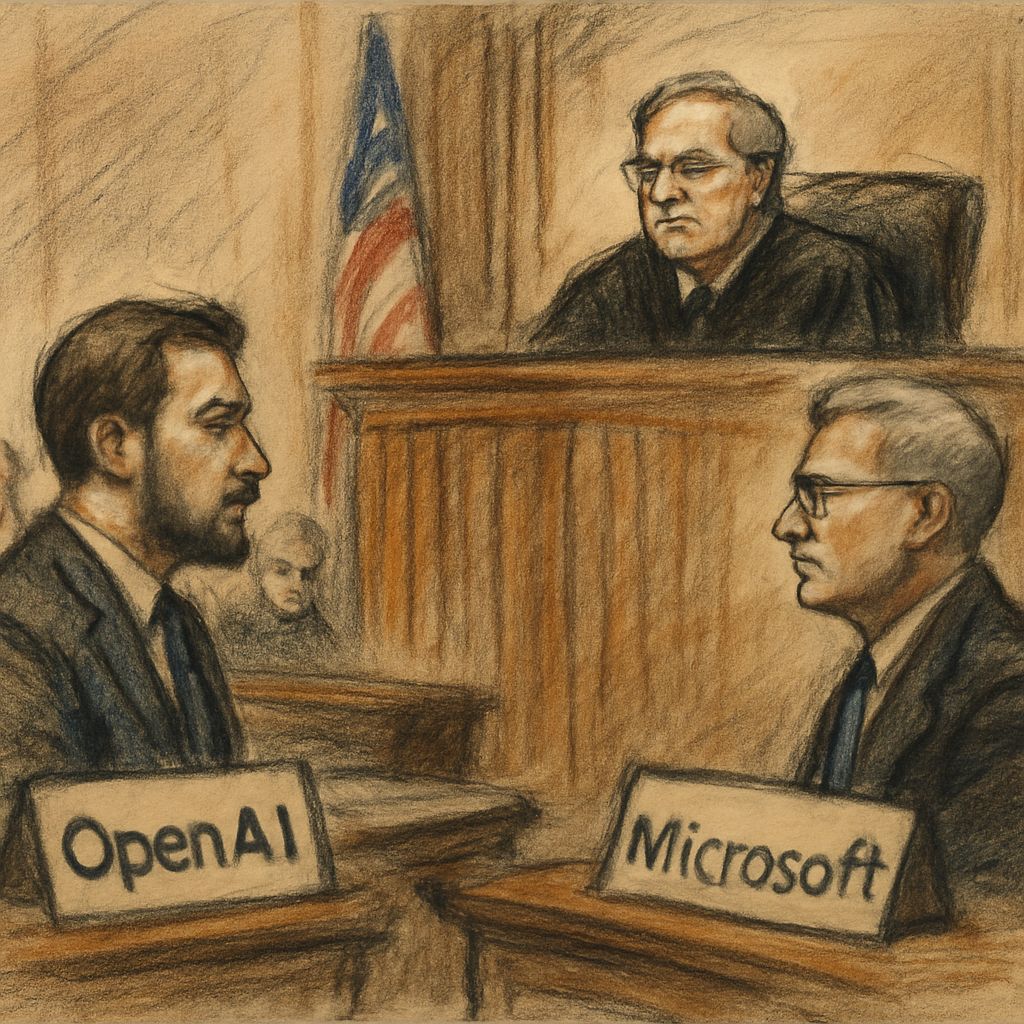
This isn’t just a business issue—it’s also political. OpenAI might even file antitrust claims against Microsoft if negotiations break down. Yes, the same company that took $13B may now accuse its investor of monopolistic behavior.
What makes this situation tricky is how public perception plays into it. On one hand, OpenAI needs to show that it’s independent and mission-focused. On the other hand, Microsoft wants to show shareholders that it’s protecting its massive investment.
Who has more to lose?
-
Microsoft: Could lose priority access to future OpenAI breakthroughs, including AGI
-
OpenAI: Might lose credibility and billions in funding if big investors pull out
✅ Pros & Cons of the Microsoft and OpenAI Partnership Falling Apart
| Pros | Cons |
|---|---|
| OpenAI gains freedom to choose partners | Microsoft loses exclusive access to cutting-edge models |
| Microsoft can reallocate resources to its own AI team | OpenAI may struggle with funding and infrastructure |
| More competition = more innovation | Risk of fragmented development and ethical compromise |
Conclusion: The Future of the Microsoft and OpenAI Partnership🤔
While both companies continue to say that the partnership still exists, the trust and alignment that once defined Microsoft and OpenAI’s relationship are fractured.
The next few months will be critical. Will they renegotiate and emerge stronger? Or will they part ways and take the AI world into separate, possibly competing, directions?
One thing’s for sure: the outcome will reshape the future of artificial intelligence.
What do you think? Should OpenAI remain independent, or does it need Microsoft to thrive? Let us know in the comments.
FAQs About Microsoft and OpenAI Partnership Talks
-
What is the current status of Microsoft and OpenAI negotiations?
The Microsoft and OpenAI partnership is currently under pressure, with negotiations reportedly stalled over control, equity, and infrastructure strategy. Talks haven’t fully collapsed, but uncertainty looms over their future collaboration. -
Why is Microsoft threatening to walk away?
Microsoft may exit further talks due to disagreements about its stake and influence in OpenAI’s future structure. The tech giant wants a larger role in OpenAI’s for-profit operations, especially around governance and revenue sharing. -
What is the dispute over equity?
Microsoft reportedly seeks up to a 49% stake in OpenAI’s for-profit arm. OpenAI’s board is hesitant to give up that much control, fearing conflicts with their core mission and public benefit goals. -
What is a Public Benefit Corporation (PBC)?
A PBC is a business that balances profit-making with a public mission. OpenAI’s PBC status allows it to prioritize the safe development of AI for the benefit of humanity, even if that conflicts with maximizing shareholder returns. -
How much money has Microsoft invested in OpenAI?
Microsoft has invested over $13 billion in OpenAI, making it one of the largest strategic tech investments in recent history. This includes cloud credits, infrastructure support, and direct financial backing. -
What is the Stargate project?
Stargate is a $500 billion supercomputing initiative led by OpenAI and backed by SoftBank and Oracle. It’s designed to build the future infrastructure for Artificial General Intelligence (AGI). -
Who else is involved in Stargate?
SoftBank and Oracle are the most prominently reported partners. Other investors and technology providers may join as the project scales. -
What is OpenAI’s reason for exploring other cloud providers?
OpenAI aims to reduce dependency on a single provider like Microsoft Azure. Using Google Cloud or Oracle allows for pricing flexibility, redundancy, and broader geopolitical presence. -
Will OpenAI continue using Microsoft Azure?
Yes, at least for now. Azure remains the primary compute infrastructure for OpenAI’s deployed models, but diversification is underway. -
Could this conflict delay AGI development?
Potentially. A lack of alignment or compute support could slow OpenAI’s research and AGI timelines, especially if major partners pull out. -
What happens to Copilot if talks fail?
Microsoft owns Copilot’s brand and integration. It will likely continue using OpenAI’s models or switch to its foundation models if the partnership weakens. -
Will Microsoft develop its own AI models?
Yes. Microsoft is actively investing in in-house models and has a dedicated team working on building its foundation models. -
Could Google or Oracle replace Microsoft?
Not fully, but they could complement OpenAI’s infrastructure needs if the Microsoft relationship diminishes. -
Is OpenAI planning an IPO?
No official confirmation. However, there have been rumors of future IPO discussions, especially with rising valuation estimates. -
What are the ethical concerns in this partnership?
The main ethical issue is whether commercial influence could undermine OpenAI’s commitment to safe, transparent, and beneficial AI. -
Will this impact ChatGPT’s performance or access?
Not immediately. Any infrastructure changes would likely be seamless to users, but long-term disruptions could impact innovation speed. -
How do developers and users benefit from this partnership?
Developers gain access to powerful APIs and integrated tools via Microsoft products. Users enjoy cutting-edge AI in Office, GitHub, and Azure platforms. -
What does SoftBank’s role mean for OpenAI?
SoftBank brings massive capital for OpenAI’s long-term compute needs, potentially reducing dependency on Microsoft. -
How much control does Microsoft currently have?
While Microsoft holds a non-voting observer seat on OpenAI’s board, it exercises significant commercial influence through funding and compute agreements. -
Can OpenAI survive without Microsoft?
Yes, but it would require alternate funding sources and infrastructure providers to maintain operations and scale. -
What are the financial risks for OpenAI?
Losing Microsoft’s financial backing and computing infrastructure could delay product rollouts and put R&D ambitions at risk. -
How might regulators respond?
If OpenAI files antitrust complaints, regulators could investigate Microsoft for monopolistic behavior in cloud infrastructure or AI commercialization. -
Has OpenAI filed any legal action yet?
No formal legal action has been reported. However, discussions about antitrust or competition concerns have surfaced. -
Why did OpenAI create a for-profit arm?
To attract external funding while maintaining the nonprofit’s mission. This hybrid model lets OpenAI scale while upholding ethical oversight. -
How does this affect the AI race globally?
Instability in leading AI partnerships could create opportunities for global competitors like China or Europe to catch up. -
Could a competitor like Anthropic gain from this?
Absolutely. Anthropic and others may attract investment or talent if the Microsoft-OpenAI partnership breaks down. -
What does this mean for AI ethics?
Fragmentation of big partnerships might dilute unified safety standards unless new global or multi-partner frameworks emerge. -
What does the public think about the split?
Reactions are mixed—some praise OpenAI’s independence, while others fear slower innovation or corporate overreach. -
What are investors saying?
Investors are watching closely. Confidence in OpenAI’s leadership and funding model will determine its next investment wave. -
Is there still hope for reconciliation?
Yes. Both parties have reasons to remain allies. Renegotiated terms may salvage the Microsoft and OpenAI partnership. -
Will there be more transparency in future deals?
Possibly. Public scrutiny may push OpenAI and partners to disclose more about governance, equity, and decision-making. -
What are the implications for AGI?
Delays in infrastructure or alignment could slow AGI development. A new approach to computing and governance may be required. -
Can this disagreement affect the national AI strategy?
Yes. If OpenAI’s AGI efforts slow, it could affect U.S. competitiveness in national AI objectives. -
Will we see more AI alliances break down?
Possibly. As stakes rise, more alliances may fracture over ethics, equity, or computer control. -
Is this the start of an AI cloud war?
It’s likely. Major cloud providers are positioning themselves to dominate AI infrastructure, and OpenAI’s shift could ignite competitive friction.