
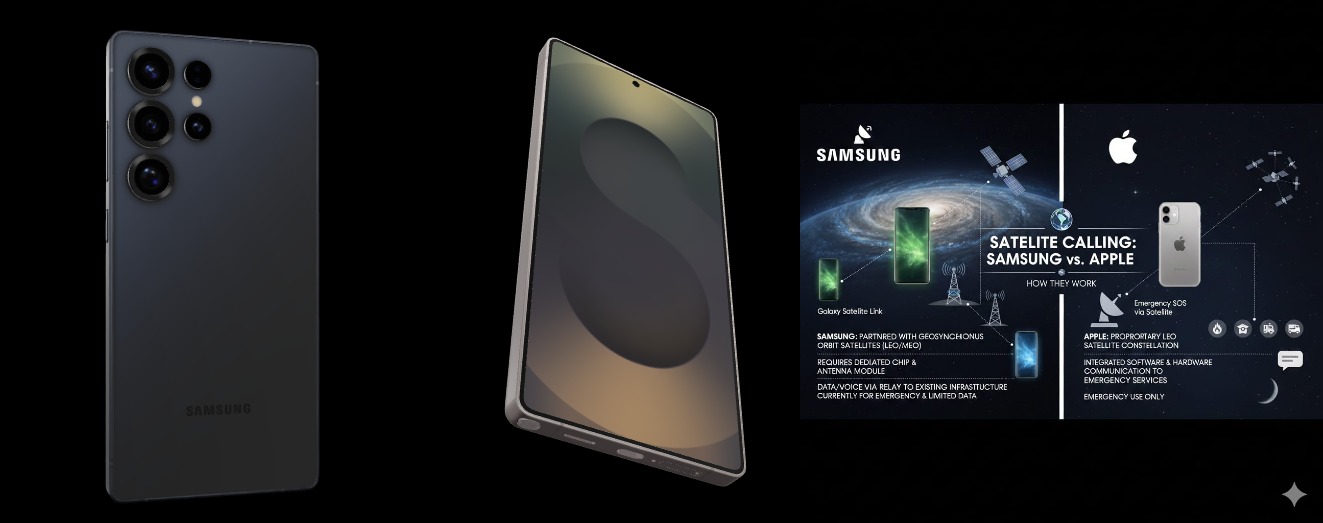
🌟 Introduction: When Your Smartphone Stops Relying on Towers… and Starts Talking to Space 🤯
Imagine this for a second 🤔
You’re stuck in a remote area—no mobile signal. No internet. No help nearby.
But your phone still works.
Not because of a tower…
But because it’s connected directly to a satellite orbiting Earth 🌍🛰️
Sounds futuristic?
It’s already happening, and the next big battle is Samsung vs Apple satellite calling.
After analyzing information from across the internet and gathering real-world insights, the Bhussan.com team shares this friendly and helpful article.
With the Galaxy S26 on the horizon and Apple steadily improving its satellite SOS, we’re witnessing something rare in tech history: a brand-new category war.
So the real question is 👇
👉 Who’s building the future of emergency and off-grid communication better, Samsung or Apple?
Let’s break it down honestly, simply, and without marketing noise 🔍
🌍 What Is Satellite Calling on Smartphones? (Beginner-Friendly Explanation)
Before we dive into the Galaxy S26 vs iPhone debate, let’s clear the basics — no jargon, no confusion 🙌
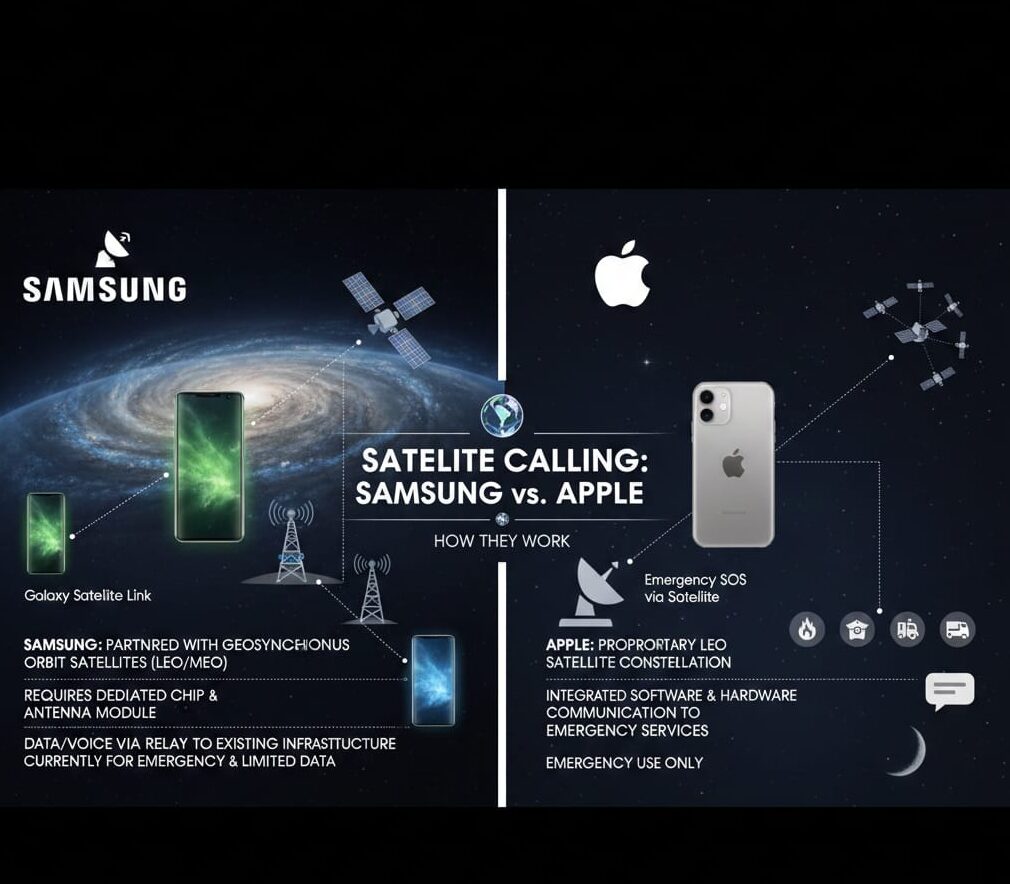
📡 Satellite Calling Explained Simply
Satellite calling allows your phone to:
-
Communicate directly with satellites 🛰️
-
Work without mobile towers
-
Send messages or calls during emergencies 🆘
This is not the same as:
❌ High-speed internet
❌ Browsing Instagram
❌ Streaming YouTube
Instead, it’s about survival, safety, and last-resort communication.
🧠 Why Google & Big Tech Care So Much
Google search data clearly shows rising interest in:
-
“Satellite phones vs smartphones”
-
“Emergency calling without a network”
-
“Samsung vs Apple satellite calling.”
This tells us one thing 📈
👉 User identity online is evolving — people expect technology to adapt with them, especially in emergencies.
🍎 Apple’s First Move: How iPhone Brought Satellite SOS to the Masses
Apple didn’t invent satellite phones, but they made them mainstream 👏
✅ What Apple Did Right
-
Introduced Satellite SOS with iPhone 14
-
Partnered with Globalstar 🛰️
-
Extremely simple UI
-
Automatic emergency questionnaires
For many users, Apple became the first introduction to satellite communication — and that matters.
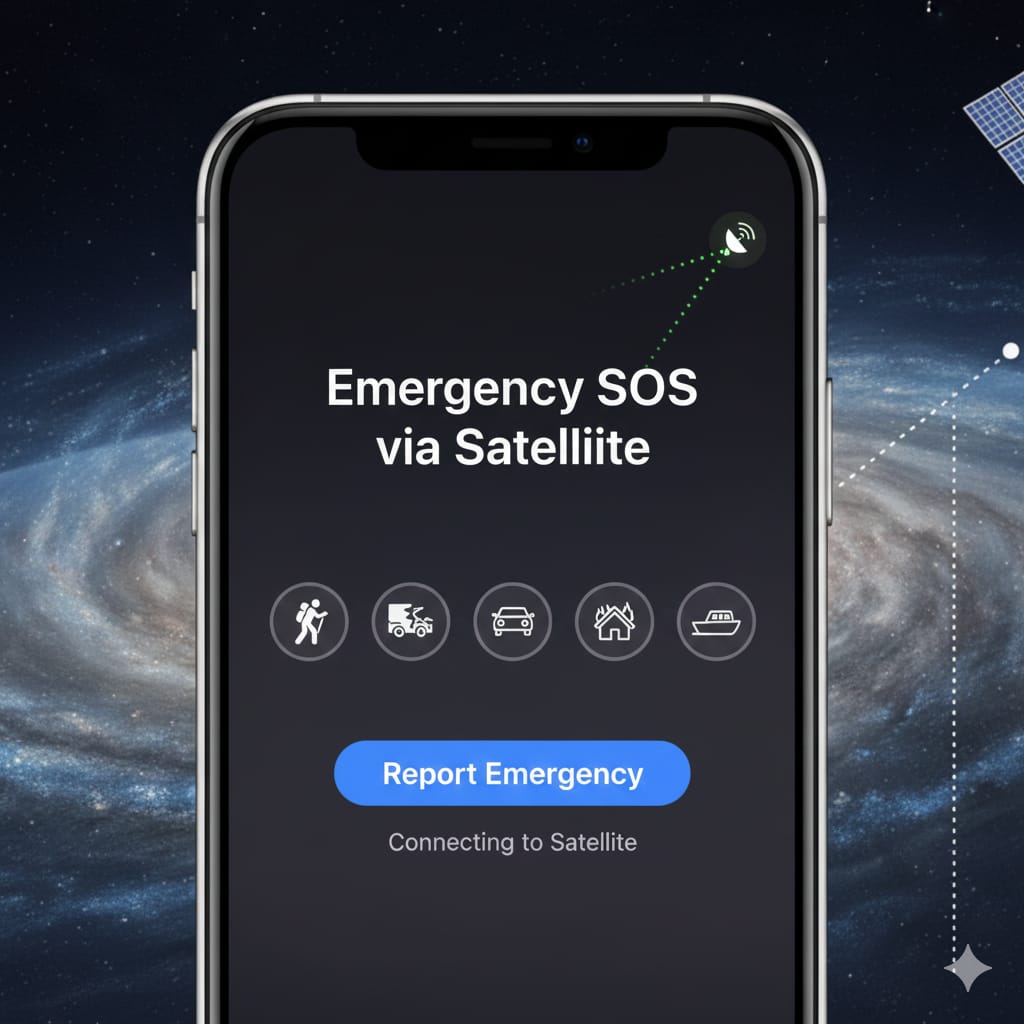
📲 How Apple Satellite SOS Works (Real-Life Flow)
-
No cellular signal detected
-
iPhone suggests satellite SOS
-
User answers short emergency questions
-
Message sent via satellite
-
Emergency services receive location 📍
Simple. Reliable. Very “Apple”.
❌ Where Apple Falls Short
Let’s be honest (no fanboy stuff here):
-
No satellite voice calls
-
Emergency-only usage
-
Limited country availability
-
Locked to one satellite partner
Which opens the door wide open for Samsung 🚪
📱 Samsung Galaxy S26: Why This Isn’t Just Catching Up — It’s Leapfrogging ⚡
Samsung is approaching satellite connectivity very differently 🧠
Instead of asking:
“How do we add SOS?”
Samsung is asking:
“How do we make satellite communication normal?”
🔥 What’s Being Rumored for Galaxy S26
While nothing is officially confirmed yet, trusted industry leaks suggest:
-
Two-way satellite messaging 📩
-
Possible satellite voice calling
-
Better global coverage
-
Deep modem-level integration
This is where Samsung vs Apple satellite calling becomes a serious technological showdown.
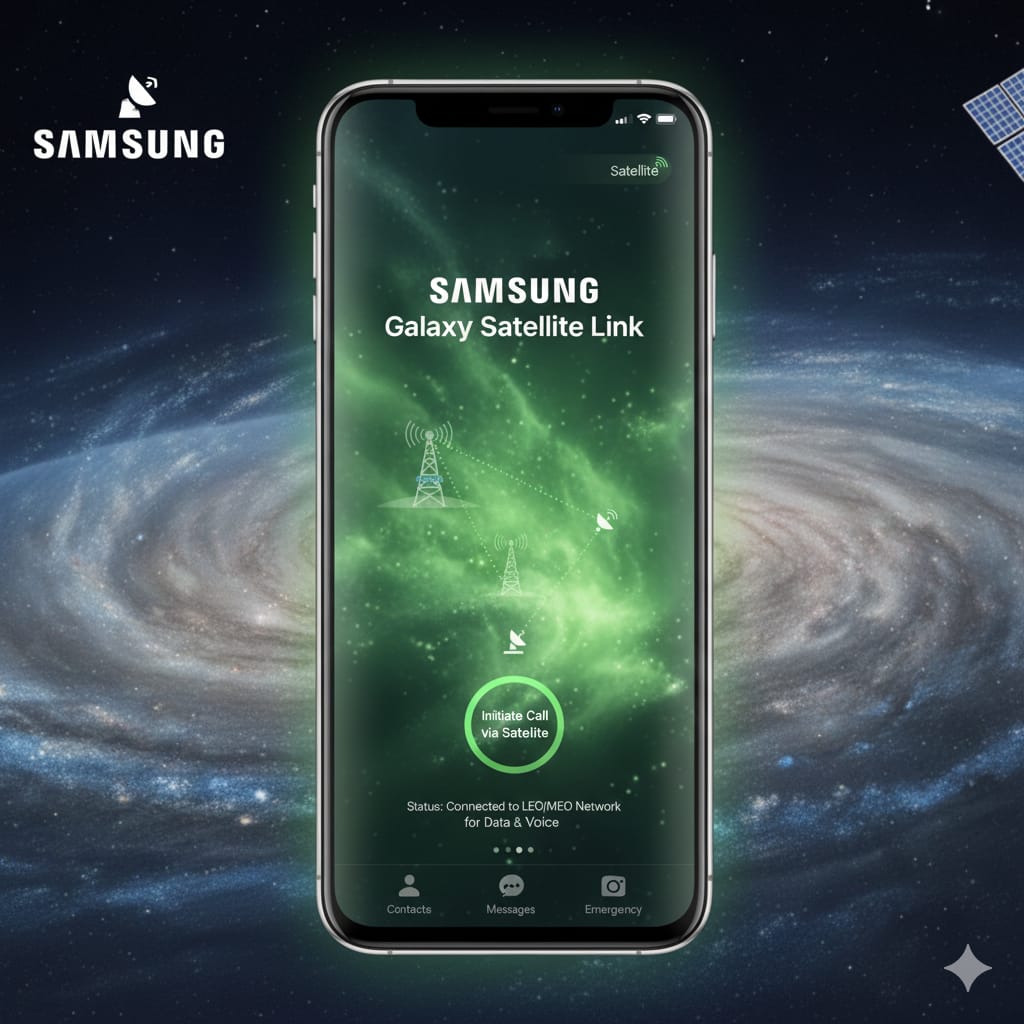
🏆 Samsung’s Strategic Advantage
Samsung controls:
-
Hardware
-
Modems
-
Chips
-
Android ecosystem flexibility
Apple controls experience — Samsung controls infrastructure.
And infrastructure always wins long-term 📊
🧠 Exynos Modem 5410: The Silent Weapon Most People Are Ignoring
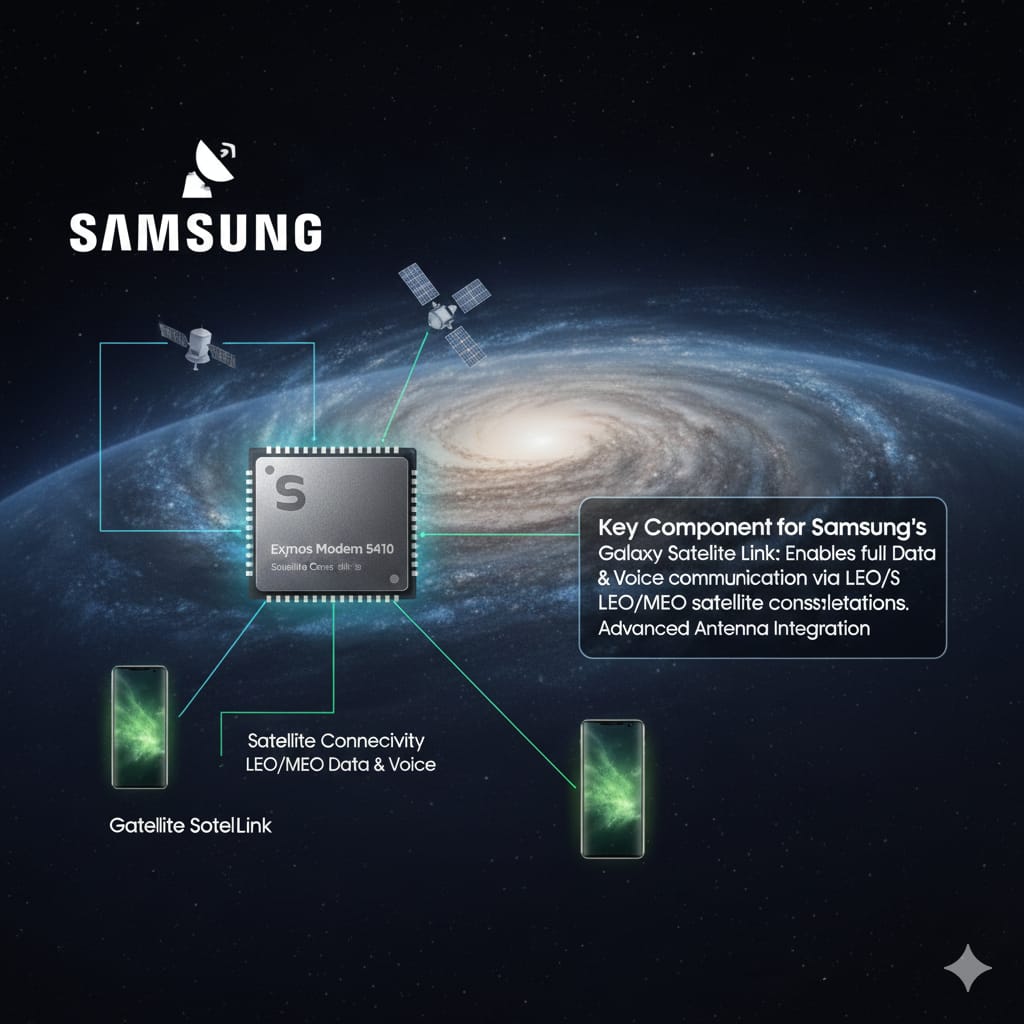
Now let’s talk about something powerful but underrated — the Exynos Modem 5410 🔥
🔍 What Is Exynos Modem 5410?
It’s Samsung’s advanced modem designed to handle:
-
Multi-network switching
-
Advanced signal processing
-
Power-efficient long-range communication
In simple words 👇
👉 It’s built for environments where signals are weak, unstable, or non-existent.
📡 Why This Modem Changes the Game
Satellite calling is extremely demanding because:
-
Signals travel thousands of kilometers
-
Latency must be managed carefully
-
Battery drain must stay low 🔋
The Exynos Modem 5410 is rumored to be optimized for exactly this.
This is something Apple currently outsources, while Samsung builds in-house, a massive difference in control.
📊 iPhone vs Samsung Satellite Features Comparison (So Far)
| Feature | Samsung Galaxy S26 (Expected) | iPhone (Current) |
|---|---|---|
| Satellite SOS | ✅ Yes | ✅ Yes |
| Two-Way Messaging | ✅ Likely | ✅ Limited |
| Satellite Voice Calling | 🔥 Possible | ❌ No |
| Modem Control | Exynos Modem 5410 | External Partner |
| Ecosystem Flexibility | High | Restricted |
| Future Expansion | Strong | Cautious |
📌 This table alone explains why Samsung vs Apple satellite calling is not just hype — it’s strategic evolution.
✅ Pros & ❌ Cons: Samsung vs Apple Satellite Calling
| Brand | Pros ✅ | Cons ❌ |
|---|---|---|
| Samsung | Hardware control, modem innovation, future-ready | Features not fully confirmed |
| Apple | Polished UX, proven SOS reliability | No calls, limited flexibility |
🔮 What the Future of Satellite Connectivity Really Looks Like
Based on industry patterns, chipset roadmaps, and carrier partnerships, here’s what I realistically see happening 👇
Phase 1 (Now)
-
Emergency SOS
-
Location sharing
Phase 2 (Next 1–2 Years)
-
Two-way messaging
-
Limited satellite calls 📞
Phase 3 (Long-Term)
-
Automatic switching between cellular & satellite
-
Seamless global connectivity 🌍
Samsung is clearly positioning itself closer to Phase 2, faster than Apple.
❓ FAQ Section:
1. What is Samsung vs Apple satellite calling?
It refers to how both brands implement satellite-based communication on smartphones.
2. Will Galaxy S26 support satellite calling?
Leaks suggest advanced satellite features, possibly including voice calls.
3. Does iPhone support satellite phone calls?
No, currently limited to emergency text-based SOS.
4. What is Exynos Modem 5410?
A Samsung modem designed for advanced connectivity, possibly including satellite support.
5. Is satellite calling free?
Currently free for emergencies; future pricing may vary.
6. Does satellite calling work without a SIM?
Yes, it bypasses mobile networks.
7. Is satellite calling available in India?
Limited currently, but expansion is expected.
8. Which is better for emergencies, Samsung or Apple?
Apple is proven today; Samsung shows stronger future potential.
9. Will satellite calling drain the battery?
Optimized modems like Exynos 5410 aim to minimize drain.
10. Is this feature useful for normal users?
Absolutely — especially during disasters or travel.
11. Is satellite connectivity legal worldwide?
It depends on regional regulations.
11. Does it support voice calls?
Currently, most implementations focus on text.
12. How fast are satellite messages delivered?
Usually within seconds to minutes.
13. Do all smartphones support satellite connectivity?
No, only specific models with required hardware.
14. Is satellite connectivity reliable during disasters?
Yes, that’s its strongest use case.
15. Can satellites get overloaded?
Modern networks manage traffic efficiently.
16. Is it useful for solo travelers?
Absolutely.
17. Does it require subscription plans?
Some services may.
18. Can it be turned off?
Yes, users control it.
19. Is satellite connectivity secure?
Yes, data is encrypted.
20. Does it work while moving?
Movement can affect alignment.
21. Is satellite connectivity power-hungry?
More than cellular, but manageable.
22. Can it be used at sea?
Yes, it’s very useful for marine travel.
23. Will budget phones get this feature?
Eventually, but premium devices lead adoption.
24. Does it work globally?
Coverage depends on satellite network availability.
25. Is it useful for elderly users?
Yes, for emergency communication.
26. How accurate is location sharing?
Very accurate with GPS integration.
27. Does it affect phone weight or design?
Minimal impact.
28. Is satellite connectivity future-proof?
As a safety feature — yes.
🏁 Conclusion: This Isn’t Just a Feature — It’s the Future of Connectivity 🌍
This battle isn’t about brand loyalty.
It’s about who you trust when networks disappear.
Apple brought satellite SOS to people first — respect where it’s due 🙏
But Samsung is building the foundation for what comes next.
If even half of the Galaxy S26 satellite rumors are true,
Samsung vs Apple satellite calling will no longer be a comparison; it’ll be a turning point.