
7 Powerful Lessons from Mahavatar Narsimha That Can Transform Your Spiritual Life
🧿 Introduction: Can a Half-Lion God Transform Your Inner World?
Have you ever faced a situation where everything seemed stacked against you—yet somehow, a force stepped in to protect you?
That’s the energy of Mahavatar Narsimha, the half-man, half-lion deity known for appearing just in time to destroy evil and restore balance.
He’s not just a character from ancient scripture. For spiritual seekers today, Narsimha is a symbol of divine strength, protection, and the courage to face inner demons.
After analyzing information from across the internet and gathering real-world insights, the Bhussan.com team presents this engaging, spiritually charged article that uncovers the deeper truths of Mahavatar Narsimha.
Mahavatar Narsimha protects Prahlad by defeating the demon king. Credit: YouTube/ Hombale Films
📜 Section 1: Historical and Mythological Origins of Mahavatar Narsimha
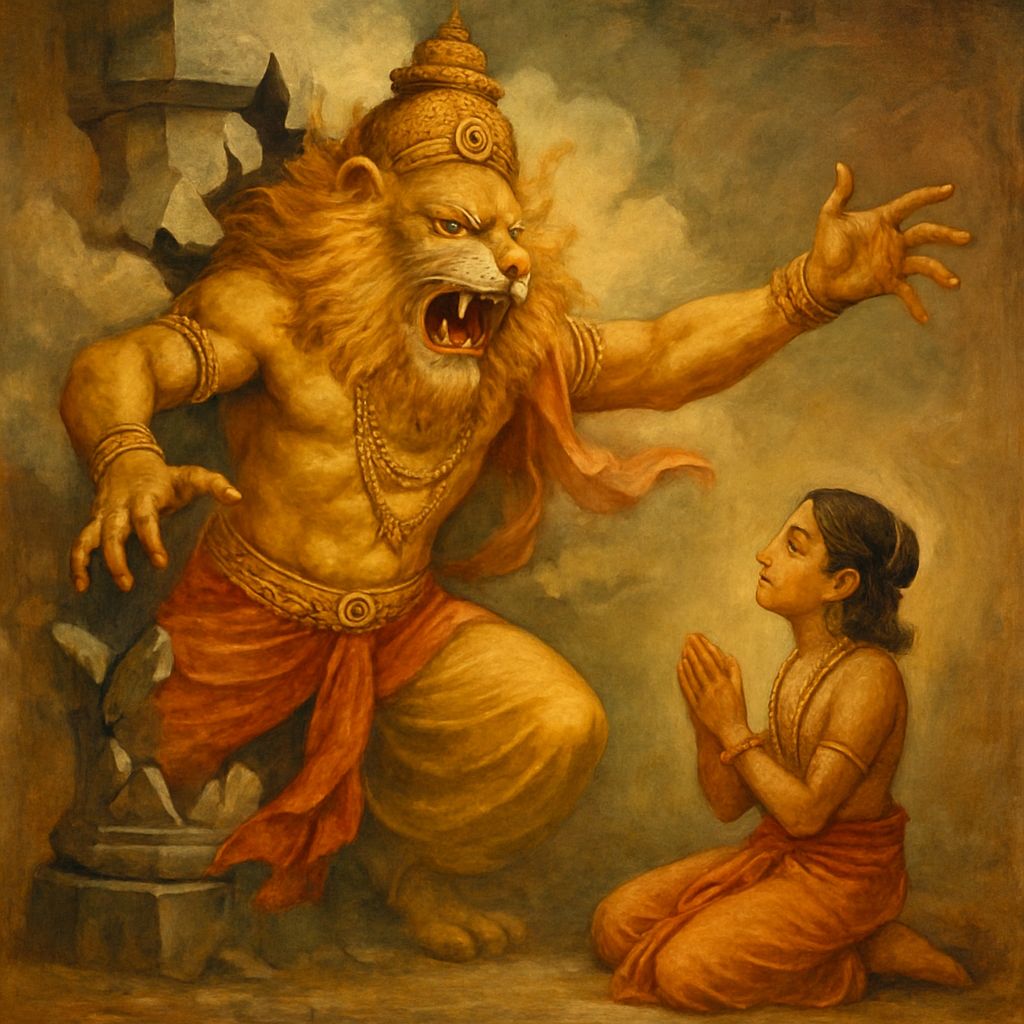
Who is Narsimha?
Narsimha is the fourth avatar of Lord Vishnu—fierce, divine, and untamable. His origin story is found in several ancient texts like the Bhagavata Purana, Vishnu Purana, and Padma Purana.
🪔 The Story in Short:
-
The demon king Hiranyakashipu was granted a boon: he couldn’t be killed by man or beast, day or night, inside or outside, on earth or in the sky.
-
His son Prahlad, a staunch devotee of Vishnu, became a target of his wrath.
-
When Hiranyakashipu challenged Prahlad by asking, “Where is your God?”—Narsimha burst from a pillar at twilight, in a half-man, half-lion form, and killed the demon in a way that broke all the rules of the boon.
🎯 Symbolism:
-
The form itself (not fully human, not fully beast) represents a transcendent force that goes beyond logic and limitations.
-
He doesn’t just punish evil—he protects innocence.
🔮 Section 2: What Makes Him a Mahavatar?
The term Mahavatar means a supreme divine incarnation that exists beyond space and time. While most avatars of Vishnu come and go with cosmic cycles, a Mahavatar is eternal—he manifests when needed.
Why is Narsimha considered a Mahavatar in certain spiritual lineages?
🧘♂️ Modern yogis and gurus report:
-
Experiencing visions of Narsimha in meditation
-
Feeling his presence during danger or a psychic attack
-
Using his mantra to overcome fear and inner turmoil
👉 Think of Mahavatar Narsimha as a force that enters your life whenever your dharma is under threat.
💥 Section 3: 7 Transformational Lessons from Mahavatar Narsimha
This isn’t just mythology—it’s life advice wrapped in cosmic fire. Here’s how Narsimha’s presence teaches us powerful truths:
| # | Lesson | Real-World Insight |
|---|---|---|
| 1 | Destroy Ego | Ego blinds us from the truth. Narsimha’s roar smashes arrogance. |
| 2 | Protect Devotion | Even a child’s prayer (like Prahlad’s) can move mountains. |
| 3 | Act at the Right Time | He appears exactly when needed—neither early nor late. |
| 4 | Face Fear Fiercely | Sometimes, divine protection means standing your ground. |
| 5 | Balance Power with Compassion | Narsimha calms after anger—he’s not chaos, but justice. |
| 6 | Embrace Divine Mystery | His form defies logic, like the universe itself. |
| 7 | Invoke When Needed | Mahavatar Narsimha answers sincere cries, not rituals. |
🧘 Section 4: The Spiritual Practice of Connecting with Mahavatar Narsimha
🔔 Daily Mantra:
“Om Ugram Veeram Maha Vishnum Jvalantam Sarvato Mukham”
Meaning: The fierce and heroic great Vishnu, blazing from all directions
🌿 How to Practice:
-
Light a diya or incense.
-
Chant the mantra 21 times in a calm state.
-
Visualize golden light emerging from your heart.
-
Imagine Narsimha watching over you—silently, powerfully.
🙌 This daily ritual acts as an emotional cleanser, especially if you’re struggling with anxiety, negative thoughts, or external pressure.
🔄 Section 5: Real-Life Impact — Does Mahavatar Narsimha Help Today?
Absolutely. Countless modern-day devotees report:
-
Sudden relief from spiritual blockages
-
Vivid dreams or visions during sadhana
-
Protection during risky moments
“I felt an invisible roar within me during a crisis—like someone else took over,” says Meena, a yoga teacher in Pune.
“It wasn’t me. It was something greater. I believe it was Narsimha.”
🧩 Even if you don’t believe in deities, his symbolic energy—raw courage, truth, and timing—can deeply impact your life.
Pros & Cons of Mahavatar Narsimha Worship
| Pros | Cons |
|---|---|
| Deep psychological protection | It can be intense for beginners |
| Clears fear & ego blocks | Requires inner readiness |
| Powerful mantra vibrations | Less mainstream than other forms |
| Works even without rituals | Needs faith and regularity |
🙋♂️ FAQ Section: 30+ Common Questions About Mahavatar Narsimha
-
Who is Mahavatar Narsimha?
A timeless, fierce form of Lord Vishnu who protects dharma and destroys ego. -
Is Mahavatar Narsimha a real being or a myth?
Both—he exists symbolically and, according to many yogis, energetically too. -
What is the main mantra of Narsimha?
“Om Ugram Veeram Maha Vishnum…” -
What does Narsimha protect from?
Fear, inner demons, dark forces, injustice. -
Can I worship him at home?
Yes. Mantra japa, simple prayer, or even just meditative invocation, is enough. -
What’s the best time to connect with Narsimha?
Twilight or during moments of mental/emotional distress. -
Is he angry or compassionate?
Both. He destroys evil fiercely but loves devotees gently. -
Can Narsimha be seen in dreams?
Many report dreams or visions during spiritual progress or danger. -
Is Mahavatar Narsimha different from normal Narsimha?
Mahavatar refers to his timeless form, beyond time and mythology. -
Do I need a guru to connect with Narsimha?
Not necessarily. Sincerity and focus are key. -
What does Mahavatar mean in the spiritual sense?
A Mahavatar is an eternal divine being—one that doesn’t take birth and death like humans but appears when the cosmic balance is disturbed. -
Is there a Mahavatar Narsimha temple in India?
Yes! Some of the most powerful Narsimha temples are in Ahobilam (Andhra Pradesh), Simhachalam, and Namakkal. Some traditions even consider them Mahavatar energies in sacred spots. -
Can I chant Narsimha’s mantra without initiation?
Yes, the Narsimha mantra is safe for anyone to chant. It protects the mind and calms negativity when done with sincerity. -
How is Narsimha different from other Vishnu avatars like Krishna or Rama?
Krishna and Rama are calm and dharmic rulers. Narsimha is a Ugra (fierce) form—he acts beyond dharma when needed to destroy adharma instantly. -
What emotions does Mahavatar Narsimha represent?
Righteous anger, divine love, unstoppable protection, fearless courage, and justice. -
Why is he half-lion and half-man?
To fulfill the unique conditions of the demon king’s boon, he had to be neither man nor beast, day nor night, and so on. Symbolically, it shows divinity has no form limits. -
Can children pray to Mahavatar Narsimha?
Yes. Children like Prahlad are protected by Narsimha. Stories of his love for child devotees are legendary. -
Is Mahavatar Narsimha worshipped in yoga traditions?
Absolutely. Some Kriya Yoga, Himalayan, and Nath lineages revere Narsimha as a protector of yogis from inner psychic attacks. -
Does Mahavatar Narsimha appear in visions or dreams?
Yes. Many report seeing glowing lion-faced beings or feeling intense light energy during dreams or meditation. -
Is Mahavatar Narsimha connected to Kundalini awakening?
Some advanced yogis believe his roar breaks energy blockages and can trigger spontaneous spiritual openings or awaken dormant Kundalini energy. -
Can Narsimha remove black magic or negative energies?
Yes, devotees often chant his mantra to dispel psychic disturbances, evil eye, and black magic. -
How often should I chant Narsimha’s mantra?
Start with 21 times daily. You can build up to 108 times, especially on Saturdays or during difficult times. -
Is there a fast (vrat) dedicated to Mahavatar Narsimha?
Yes, Narasimha Jayanti is observed with fasting and mantra japa, usually in April-May. -
Is there a feminine form of Narsimha?
Yes! Some tantric traditions worship “Pratyangira Devi,” considered the fierce lion-faced goddess and consort energy of Narsimha. -
What’s the difference between Ugra Narsimha and Lakshmi Narsimha?
Ugra Narsimha is fierce and wrathful. Lakshmi Narsimha is calm, shown with Goddess Lakshmi on his lap, symbolizing balance after the storm. -
Can I wear a Narsimha pendant or yantra?
Yes! A Narsimha yantra or pendant can act as a personal shield, especially if energized through chanting. -
What happens when Narsimha is angry?
Mythologically, the universe trembles. Spiritually, it means ego, ignorance, or evil gets destroyed. -
Is Mahavatar Narsimha worshipped outside Hinduism?
While rooted in Hindu tradition, some spiritual seekers from other paths invoke him as an archetype of fierce divine energy. -
How do I know if Mahavatar Narsimha is calling me?
Sudden attraction to his image, dreams, or deep peace when hearing his mantra can all be signs. -
Is it okay to fear Narsimha’s form?
It’s natural at first. But over time, you realize his form is fierce only toward negativity—to devotees, he’s a gentle protector. -
Can Mahavatar Narsimha be my Ishta Devata (personal deity)?
Yes! If you feel strongly drawn to him, he may already be your divine guardian.
🧾 Conclusion: Final Thoughts on Mahavatar Narsimha
Mahavatar Narsimha is not just a figure from the past—he’s a force alive within us.
He teaches us to face fear with faith, destroy ego with humility, and trust that divine help comes right on time. Whether you see him as a god, a protector, or a symbol, his presence can awaken your most powerful self.
🙏 Ready to call him into your life? Light a diya, chant his name, and feel the transformation.
🔗 External Resources: